Are You Planning a Long-Distance A.T. Hike?
Before heading out on the Appalachian Trail (A.T.) for your thru-hike or backpacking trip, check out the Appalachian Trail Conservancy’s hiker prep series for expert tips on preparing for the Appalachian Trail. We want you to have a safe and enjoyable A.T. experience, and that starts with being prepared!
Know Before You Go
More than any piece of gear, being prepared with the knowledge and skills you need is essential for a safe and enjoyable hike.
Learn the Basics
Visit our Hiker Resource Library, a one-stop resource for A.T. hiking knowledge. With gear lists, proper food storage techniques, Leave No Trace principles, Trail safety tips and more, you’ll have the know-how to start your hike on the right foot.
Follow Trail Updates
Keep up-to-date with the latest alerts and conditions on the A.T., including severe weather notices, emergency Trail closures, and Trail conditions on our Trail Updates page or registering for SMS/email alerts on ATCamp.

Register & Monitor Your Start Date in ATCamp
Register your A.T. hikes at ATCamp.org, the ATC’s voluntary hiker registration platform. Registering helps reduce overcrowding on the A.T. and provides Trail managers will valuable information on how many people hike the Trail.
You can monitor your start date as it approaches and keep track of how many other hikers plan to begin their adventures with you. Consider adjusting your start date if the number of registered hikers goes over 50. If your plans change, you can cancel or edit your registration in your ATCamp account and open your spot for another hiker.
Permits You’ll Need on the A.T.
While permits are not required for most of the A.T., there are three locations on the Trail that do. There is no single, Trail-wide permit for long-distance or thru-hikers.



There are also campsite fees along the A.T. in the White Mountains of New Hampshire.
Pro tip: Create an account recreation.gov before you leave for your hike if you don’t have one already. This way you’re ready to purchase your permit when you reach the Smokies and Shenandoah.

Have You Considered an Alternative “Flip-Flop” Thru-Hike?
Along with reducing overcrowding, a flip-flop hike can also offer milder weather at the beginning of your hike and more solitude.
Learn More
Backpacking Skills You Should Know

Leave No Trace
These seven principles will help protect the Trail and preserve the A.T. hiking experience for everyone.
LNT Principles
Don’t Feed the Bears
Storing your food properly on the Appalachian Trail will help keep you, your supplies, and wildlife along the Trail safe.
Bears & Food Storage
Campsite Selection
The secret to happy campers is preparing a camping and sleeping setup that maximizes comfort and safety while reducing your impact on the Trail.
How to Camp
Priority #1: Safety
Before heading out on your hike, make sure you have the equipment and knowledge you need to stay healthy and safe.
Safety Tips
Campfire Safety
Only you can prevent wildfires. Know how to safely manage a campfire, where along the A.T. they are allowed, and how to keep safe during wildfire season.

The 10 Essentials
Beyond the “big three” — your backpack, sleep system (sleeping bag, pad, etc.), and personal shelter — make sure to bring these essentials on your journey.
What to CarryHiking & Helene
Hurricane Helene, which hit the southern Appalachians in late September 2024, caused widespread destruction. Learn about how to stay safe in areas with storm damage.
Learn More
Your First Day on the Trail
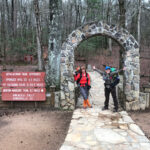
Your first day looks different depending on where you start. Northbound hikers begin at Amicalola Falls State Park in Georgia. Southbound hikers start by summiting Katahdin in Baxter State Park and should prepare by reading our SOBO starting guide. Flip-flop hikers may start anywhere along the Trail and should plan ahead for transportation, parking, and other seasonal considerations.
Your NOBO start date has arrived and you’ve just been dropped off at Amicalola Falls State Park – now what? Pick up your A.T. hangtag and catch the Start Smart presentation at the Visitor Center. Starting in mid-Februrary, Georgia Appalachian Trail Club volunteers and ATC staff are in the Arch Room to hand out hangtags and answer questions.
During peak NOBO season, Basecamp is generally open from 8am to 4pm – look for the signs directing A.T. hikers there. Bring your ATCamp registration number with you for a faster registration process.
If your hike begins before Basecamp is open, be sure to still sign in at the visitor center. By the time you reach Damascus, VA, hangtags should be available at the Damascus Trail Center.
SOBO hikers must make reservations before arriving in Baxter State Park. You can reserve either a campground site or a Katahdin Trailhead Pass. Once that’s secured, you can arrange your travel. If no one is driving you to the park, there are bus and shuttle options to get to Baxter from Bangor, Medway, or Millinocket, ME.
On your first day in Baxter State Park, collect your Long Distance Hiker Permit at Katahdin Stream Campground. We strongly recommend checking out a daypack to carry up the mountain. Then you’ll be ready to prepare your gear and check conditions before your summit.
Plan your SOBO hikeWe hope you’ll consider starting your flip-flop thru-hike with us at our annual Flip Flop Kickoff event in Harpers Ferry, WV!
Otherwise, the starting location of your flip-flop or section hike can vary, so it’s best to plan your transportation to the Trail in advance. Visit our transportation and parking page for information on getting to/from your starting and ending locations for every part of your hike.
You can also overlay parking information on our free online interactive map to help plan your trip.
Plan your Flip-Flop hike
Report an Incident
While the Appalachian Trail is a relatively safe place to visit, that does not mean that there are not potential dangers while you are hiking or camping. If you see something, say something — this will help us keep the A.T. as safe as possible for our visitors.
Visit Us During Your Hike
Stop by any of the ATC Visitor Centers to chat with friendly staff and volunteers about local Trail conditions. You can also pick up your A.T. hangtag at our visitor centers, as well as during Basecamp each spring at Amicalola Falls State Park in Georgia.


You A.T. Adventure Awaits
The Appalachian Trail is a beloved resource. We hope our hiker preparation resources have helped you learn about the many ways you can protect the A.T. experience and how you can have a safe, enjoyable visit to the Trail.
Final Thru-Hike Prep Checklist
For those preparing to set off on your A.T. adventure, double-check your prep against our final checklist:
- You’ve registered your hike on ATCamp.org and have been monitoring your start date.
- You’ve subscribed to receive updates from the ATC through ATCamp, including important Trail Updates and alerts.
- You’ve read through the Hiker Resource Library to learn the basics for visiting the A.T.
- You’ve read about and practiced applying Leave No Trace principles to your hike.
- You know about the permits you’ll need in Great Smoky Mountains National Park, Shenandoah National Park, and Baxter State Park.
- You’ve checked the latest information about conditions related to Hurricane Helene damage.

Happy Trails!
A long-distance hike on the A.T. is an incredible experience. Thank you for your help in protecting the A.T. experience by utilizing the tips and guidance above and, most of all, enjoy your journey!