Campfire Safety
For as long as there has been camping, there have been campfires — not only for warmth, lighting, and cooking, but also for group bonding, storytelling, and other social activities.
However, campfires that are not built or cared for properly can cause devastating wildfires that may impact the landscape for decades. Before setting up camp, know how to build campfires responsibly and whether campfires are permitted where you are camping.
Campfire Basics
- Keep campfires small and burn only small pieces of dead and downed wood gathered from the surrounding environment (leave the hatchets and axes at home). A good rule is to only burn branches no thicker than your wrist.
- Use only existing fire rings at officially designated sites whenever possible. If an established fire ring is not available, choose areas that are already impacted and don’t have heavy vegetation that could potentially catch fire. Also be sure to clear away any dry leaves, twigs, or pine needles.
- Use camp stoves for cooking. This minimizes the chances of sparks flying into the environment.
- “Stealth camping” and dispersed camping means leaving no impact on the environment — this means no campfires.
- Do not burn trash. Doing so can cause permanent damage to the environment, leach chemicals into nearby water sources, and attract wildlife like bears.
- Be aware of dry/drought conditions and local burn bans. If it has not rained recently, the chances for wildfires will be significantly higher. Do not build a fire during these conditions. Check the Trail Updates page for more information.
Campfire Restrictions
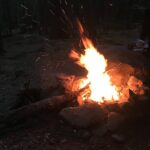
Keep in mind that campfires are not permitted on some parts of the Trail. Many areas along the A.T. restrict fires to designated sites only or prohibit fires altogether, and there are annual burn bans in certain sections. Check out our Trail Updates for the latest bans and restrictions.
Current Fire Restrictions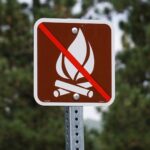
Extinguishing Your Campfire
Most campfire-caused wildfires develop because the campfire was not completely extinguished.
Even if there is no visible sign of burning (smoke, glowing embers, etc.), a fire may reignite if there is still heat beneath the surface. To properly put out a campfire, follow these steps:
- Burn all sticks and logs to white ash (this is why picking logs no thicker than your wrist is important).
- Carefully “knock” the fire down with a stick (or metal trowel) until only small or no flames are present.
- Mix the hot coals, underlying dirt, ash, and inorganic debris with the stick or trowel while steadily trickling water over it.
- Carefully place your hand, palm down, over the mixture without touching it to test for heat. If it’s still hot, repeat step 2 until it’s no longer hot.
- Once the mixture is no longer too hot to touch, continue to trickle water over it while carefully and methodically stirring the mixture until it’s cold to the touch. If you encounter hot spots, douse the ashes with additional water. If you used a stick to stir the mixture, make sure it’s also cold.
- Once the fire is completely out, use the remaining water to rinse your hand.
- Scatter the cold, built-up ashes away from the campfire ring, water sources, and campsites.
Remember, when dealing with fire in any way, always use the highest degree of caution and care.
Alternatives to Campfires
Though campfires can provide many benefits, they require time, effort, and knowledge to maintain. There are many other ways to meet your needs when in the outdoors:
- A good layering system of moisture-wicking and insulating materials will provide warmth and comfort as well as — if not better than — a campfire could.
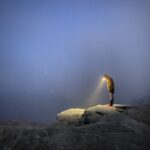
- A headlamp will make moving around your campsite safe, simple, and hands-free.
- A small lantern can provide the atmosphere and camaraderie of a fire, but on a smaller scale.
- A cook stove is faster and more efficient than cooking over a fire. Cook stoves are also usually allowed during burn bans.
ATC staff tip: A flashlight or headlamp tucked under a Nalgene bottle full of water provides an awesome glowing centerpiece for any campsite.
Keep Virginia Cozy