2025 Highlights
Dec 11, 2025

Dec 11, 2025
Throughout 2025, the Appalachian Trail Conservancy (ATC) celebrated 100 years of collaboration, vision, and determination that began with Benton MacKaye’s idea for a “realm and not merely a trail.”
Across 14 states and dozens of nearby communities of every size, ATC staff, volunteers, partners, and members rose to meet both expected and unforeseen hurdles, including recovery from Hurricane Helene, uncertainty over federal support and collaboration, and evolving conservation challenges, with the same tenacity that has sustained the Trail for a century.
Together, we are building the foundation for the next hundred years of stewardship, a future defined by resilience, innovation, and shared responsibility for one of America’s most beloved outdoor gateways and a globally significant wilderness corridor.
As we wrap up an exciting and memorable Centennial year, we want to spotlight a few accomplishments that advanced trail sustainability, science and stewardship, land conservation, advocacy, and education. All of these, and more, were made possible thanks to our supporters and partners.
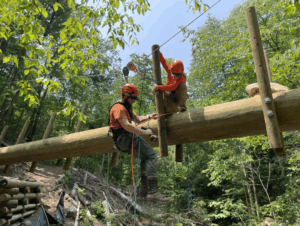 Three new A.T. bridges were completed in central and southwest Virginia in 2025.
At the north end of the Mount Rogers High Country, the aging bridges over Fox Creek were replaced on schedule, despite significant impacts from Hurricane Helene in the area. The storm changed the shape of the creek channels and swept away the smaller bridge. The final structure accounts for changes to the river’s channel and provides a safe crossing of Fox Creek.
Where the A.T. crosses Virginia Highway 311 near McAfee Knob, a new pedestrian bridge constructed in partnership with the National Park Service, Virginia Department of Transportation, and the Roanoke A.T. Club (RATC) provides safe passage from the parking lot to the popular day-hiking destination visited by approximately 70,000 people a year.
And, near Buena Vista, a new bridge over Brown Mountain Creek restores the A.T. to its ideal scenic location, after the original structure was destroyed by a fallen tree in 2018. The ATC is proud to have led and coordinated these projects, which were made possible by strong local partnerships with Trail Clubs and land managers.
The ATC partnered with the U.S. Forest Service and Southern Appalachian Wilderness Stewards to host the 2025 Wilderness Skills Institute in North Carolina. Now in its 14th year of advancing professional and volunteer stewardship across the southern Appalachian region, the 2025 Institute brought together 268 participants, including 62 first-time attendees, to strengthen the capacity, safety, and collaboration of those who care for the Appalachian Trail and surrounding public lands.
The A.T. Volunteer Leadership Meeting (VLM100) brought together rising leaders from 27 A.T. Clubs to share ideas, build stronger connections, and explore strategies to grow and support the next generation of Trail stewards. Sessions provided practical tools for leaders at every level, and attendees left with renewed energy and connection to the broader A.T. community. The VLM100 concluded a strong volunteer season, with 4,592 volunteers contributing 155,256 hours to maintaining the Trail. Learn more about the accomplishments of A.T. volunteers in the 2025 Volunteer Impact Report.
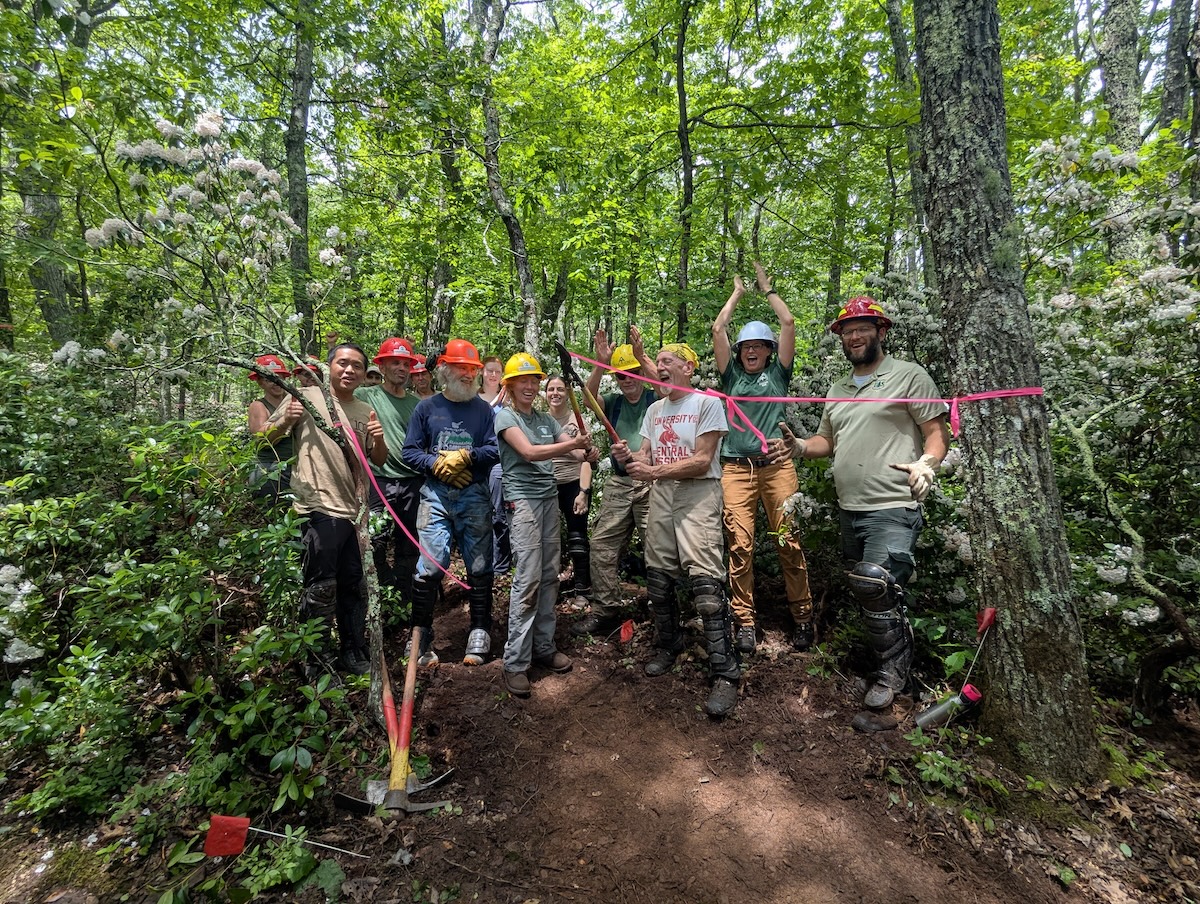
The ATC’s Konnarock Crew and the RATC officially opened the War Spur A.T. relocation in Virginia’s Mountain Lake Wilderness. This new sustainable trail section replaces a steep, erosion-prone portion of the Trail and threads through lush laurels, dense ferns, and rock formations at a more manageable grade. The relocation project, first envisioned decades ago, overcame tough terrain and delays to provide a safer, longer-lasting Trail corridor.
In the rugged backcountry regions of New Hampshire’s White Mountains, the ATC worked with the Appalachian Mountain Club and the National Park Service to fund and support approximately 22 weeks of professional trail crew operations.
These crews rehabilitated and strategically relocated sections of the A.T. that cross fragile lakeside shorelines, high-elevation wetlands, and steep, exposed ridgelines — terrain that is especially vulnerable to heavy use, erosion, and climate-driven storm damage.
Following Hurricane Helene’s devastation, the ATC coordinated an unprecedented 25-acre mitigation effort atop Roan Mountain. This project protects approximately 2,000 acres of vulnerable, high-elevation spruce-fir forest from post-storm wildfire risk, a catastrophic possibility in areas left with fallen trees and broken canopy.
Working in partnership with the U.S. Forest Service and local conservation organizations, the effort furthers the ATC’s work in risk mitigation, ecological restoration, and landscape resilience.

On Max Patch, ATC staff and partners planted over 8,000 native wildflower and grass plugs across 1.6 acres of degraded land, restoring pollinator and songbird habitat in one of the Trail’s most-visited scenic balds.
This work advances rewilding efforts to reduce overuse stress and strengthen ecological resilience in a place long challenged by visitor impact. Collaborating with the U.S. Forest Service, Carolina Mountain Club, and local experts, this planting helps shift Max Patch toward a healthier balance between recreation and biodiversity.
In Pennsylvania’s Cumberland Valley, the ATC partnered with a research team from the University of Delaware to install instruments for bird and pollinator monitoring at the Cove Mountain fields. This research will support the National Park Service’s Eastern Grasslands Restoration Project, which currently includes roughly 30 acres of fields along the Appalachian Trail in PA. This project aims to restore native grasslands, which are the most imperiled ecosystem in North America, throughout the Eastern U.S.
A 3-acre property where the Trail runs through vulnerable private land near Maryland’s iconic Weverton Cliffs was permanently protected. By partnering with the Trust for Public Land, Maryland Department of Natural Resources, and other supporters, the ATC helped secure the acquisition of this quarter-mile parcel ensuring uninterrupted connectivity along the A.T.

This acquisition eliminates threats of fragmentation to visitor access and wildlife habitat. Thanks to this work, the A.T. remains seamless in this busy corridor, just as the ATC and its partners envisioned in our landscape conservation strategy.
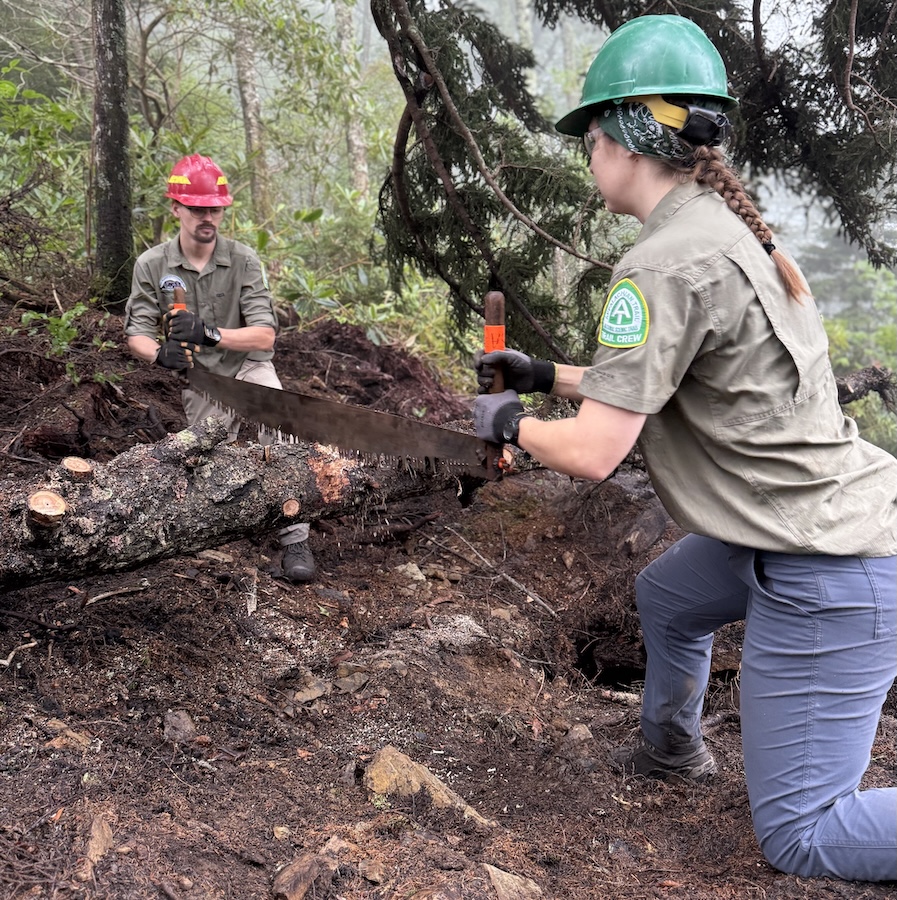 Across the Trail, we were excited to reactivate the Wild East Action Fund in 2025. These competitive grants provide resources for land protection and conservation planning in the A.T. landscape. A new grant category was added this year to support community resilience projects located within the area impacted by Hurricane Helene.
A total of $489,000 was awarded to 17 conservation organizations to advance projects that will protect over 80,000 acres of land, supporting recreational access, scenic views, climate resilient lands, and cultural resources.
The Wild East Action Fund will continue supporting local conservation and resiliency efforts in the A.T. Landscape thanks to a transformational gift from the Dunleavy Foundation.
In 2025, the ATC launched the Appalachian Trail Community Conservation Collaborative (ATCCC) in Pennsylvania, partnering with the South Mountain Partnership, state agencies, and local stakeholders to empower 15 municipal teams to lead conservation projects in their own communities.
The ATCCC will offer technical assistance, planning support, data tools, and funding navigation — all at no cost to participating towns — with an emphasis on local leadership, environmental resilience, and equitable engagement.
A.T. congressional champions Senators Tim Kaine and Thom Tillis and Representatives Mike Lawyer and Don Beyer reintroduced the bipartisan Appalachian Trail Centennial Act in 2025. This bill will secure and strengthen the partnership nature of National Scenic and Historic Trails and will recognize the ATC’s long-standing role as the Trail-wide partner in the A.T.’s management and operation.
The ATC launched a new advocacy tool to make it easier for ATC members and A.T. supporters to take action and let their elected members know about policy and legislation that is imperative to A.T. protection and the success of the Trail’s volunteers and cooperative management.
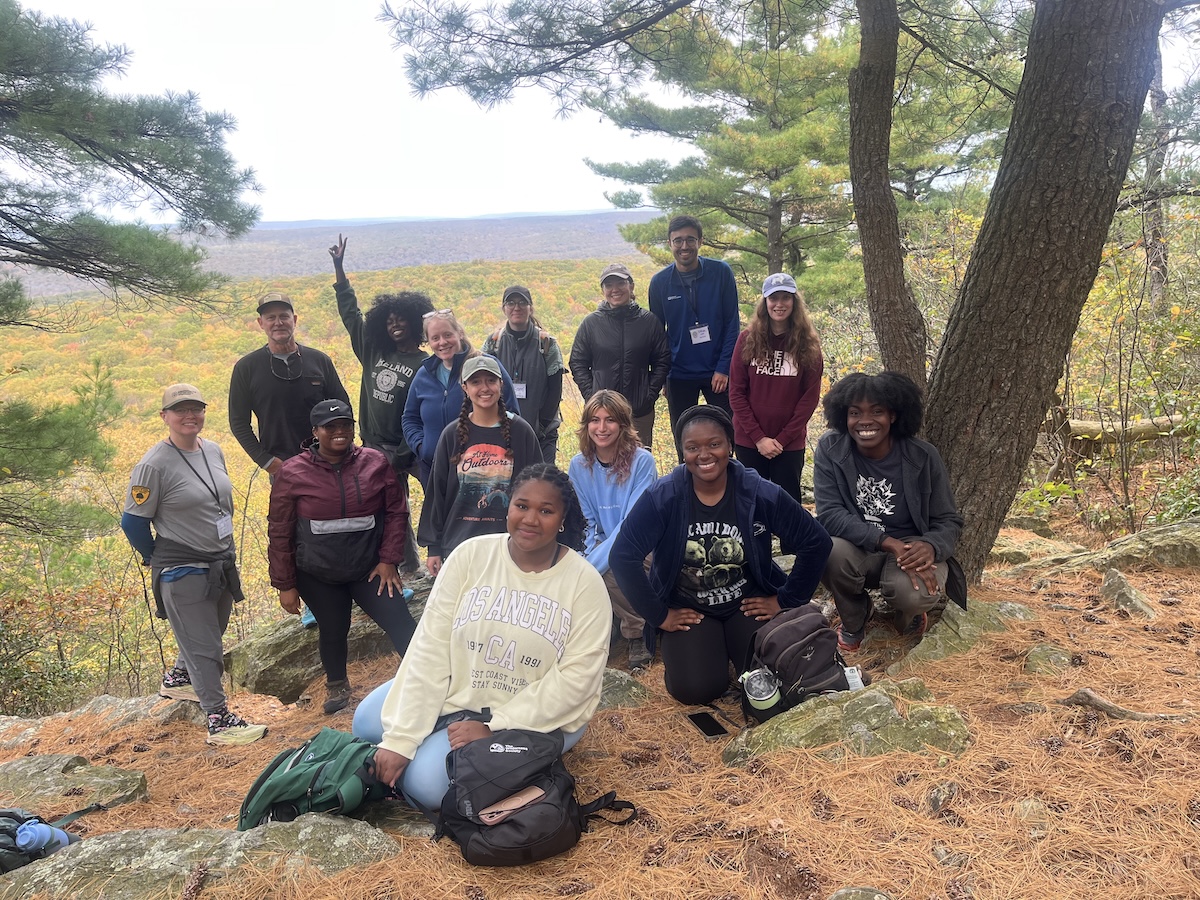 The ATC hosted its sixth annual Emerging Leaders’ Summit, empowering young adults to become changemakers in conservation and responsible recreation. Thirty-five diverse participants from 13 states gathered to celebrate the ATC’s Centennial, expand their leadership skills, and explore how their personal stories connect to the future of the Appalachian Trail.
Through workshops, community-building, and hands-on learning, participants deepened their commitment to safeguarding the Trail and fostering the next generation of environmental stewards.
Also, the ATC and Potomac Appalachian Trail Club partnered to provide education to a group of NYC-based students participating in a six-day, first-time backpacking experience with Soul Trak Outdoors. Participants learned foundational outdoor skills, including low-impact camping, backpacking logistics, and trail ethics, while traversing the A.T.
PATC Ridgerunners offered real-world interpretation of Leave No Trace principles, trail-use regulations, and stream-crossing safety, which deepened students’ engagement in conservation and inspired them to advocate for equitable access to the outdoors.
This year, the ATC also launched its inaugural Artist in Residence program. Metalsmith, Mallory Weston, completed her northbound thru-hike and will create works of art inspired by her time on the Trail. Be on the lookout in 2026 for her work in ATC visitor centers and other locations along the A.T.

Throughout our Centennial year, we witnessed how the Trail’s strength lies not just in its length or history, but in the collective will of those who care for it. And as we look to the next 100 years, the ATC is more committed than ever to tackling the challenges ahead by strengthening our science-based management, expanding access and equity in the outdoors, and building a resilient Trail in the face of climate change and a growing community of explorers.
We had a blast celebrating this historic milestone year at events up and down the Trail. From the debut of the Appalachian Trail Forever Stamps in Georgia, to Appalachian Trail Days in Damascus and FlipFlop Kick-Off in Harpers Ferry, to our Centennial Gala, and virtual activities via our Centennial Summer Bucket List, redesigned appalachiantrail.org website, and Take a Hike definition petition, we hope the excitement of our 100 years and the promise of the next century inspires you to help keep the Trail alive.
You can help us write the next chapter.
Stay connected by subscribing to Trailway News for weekly updates, stories, and opportunities to get involved.
Use #ATCSpotlight to share your adventures on the Trail and follow us on social media to join the conversation and see stewardship in action:

Your gift for the A.T. will go 2x as far with the 2,000-Miler Match!
A group of 2,000-Milers are matching every gift made to the ATC up to $101,000 before 3/31.
Give Now