Thinking of a Southbound thru-hike From Maine to Georgia? Southbounders, or SOBOs, begin on some of the most technically difficult sections of the entire Appalachian Trail (A.T.), but also experience more solitude, especially as they enter the southern sections of the A.T. in the fall.
About Southbound Thru-Hikes

What Is a SOBO Thru-Hike?
“SOBO” means travelling southbound, or north to south, on a long-distance trail like the Appalachian Trail.
On the Appalachian Trail, a SOBO thru-hike begins at Katahdin in Maine and ends at Springer Mountain in Georgia.

When Do SOBO Hikers Start?
The typical A.T. SOBO thru-hiker starts in June to mid-July.
The favorable window of SOBO hiking is 4-5 months, while the average thru-hike takes around 6 months.
Is a Southbound Hike Right For You?
A southbound thru-hike is recommended only for experienced and fit backpackers who are looking for an extreme physical challenge right at the start. A southbound thru-hike starts with challenges immediately:
- The most difficult climb on the entire A.T. (Katahdin)
- The most remote section of Trail (100 Mile Wilderness)
- The two most challenging states of the Trail (Maine and New Hampshire).
On average, fewer than 100 SOBOs report completing the A.T. each year.
We want you to be successful, and for that reason we recommend starting in Maine only if you have considerable experience backpacking on the Appalachian Trail in Maine or New Hampshire or similarly challenging terrain.

Katahdin View from Abol Bridge. Photo by Chris “Overdrive” Hood

Alternatives to SOBO
NOBO and SOBO aren’t the only ways to thru-hike the A.T. Flip-flop thru-hikes are becoming increasingly popular and offer many of the similar benefits of a SOBO thru-hike, like milder weather and less crowding, while avoiding the difficulties of starting in Maine.
When Should I Start My SOBO Hike?
The best times to start a SOBO thru-hike are in June or the first half of July. We do not allow registering your SOBO start date until June 1 in ATCamp because Katahdin trails may not be open until this date.
Keep in mind that the earlier you start in this window, the poorer conditions are in Maine. You will have to deal with more high-water crossings, black flies, mud, and downed trees that may not yet be accessible to dedicated volunteer Trail maintainers. As snow melts into late May, stream crossings can rise rapidly and be extremely dangerous. Furthermore, hiking during mud season can damage the trail.
But, to wait until July when conditions improve means adding another month of winter hiking in the southern mountains where elevations can exceed 6,600 feet. This means encountering ice, snow, and sub-freezing temperatures as soon as late October. You’re also losing out on some of the best months to hike in the mid-Atlantic states onward.
Plan Your SOBO Hike A.T. Hiker's Guide to Katahdin
Plan for a Smaller Window of Favorable Conditions
The window of favorable hiking conditions for a southbound thru-hike is only 4-5 months; the average thru-hike time is almost 6 months.
SOBOs must be very fit and disciplined, plan their timing well, and maintain a high mileage average with few days off. Otherwise, they must be prepared to face poor conditions at one or both ends of the Trail due to weather and other seasonal issues that make these sections more dangerous than normal.
What Can I Expect on a Southbound Thru-Hike?

Extremely Difficult Terrain To Start
A SOBO thru-hike begins with the hardest part of the Appalachian Trail. You don’t have a chance to get your trail legs under you before hitting the steepest mountains.
Katahdin, the mountain you climb on your first day, is arguably the hardest climb on the Appalachian Trail. It has more than 4,000 feet of elevation gain, the greatest sustained ascent on the entire Appalachian Trail. As you head south into the 100 Mile Wilderness, the mountains may seem small because of modest elevations, but they are some of the most rugged in Maine.

Swarming Insects
If you start in June or July, you will encounter stinging, biting, and irritating insects. Black flies, mosquitos, deer flies, gnats, and horse flies are all out as early as late May and throughout much of the summer.
A head net is highly recommended this time of year in Maine. Be sure to educate yourself on preventing tick-borne diseases.

Formidable Stream Crossings
Most stream crossings in Maine do not have bridges. This means you have to ford. At times streams can run swift and deep, especially in May and June from snowmelt. Know how to ford water crossings safely.

Challenging Weather
Weather in Maine can run the gamut through early summer. There can be quick temperature swings from hot and humid to cool and brisk. Snow may still be present in higher elevations through May. Be prepared for rainy days and thunderstorms in the afternoon

High Early Drop-Out Rates
Sadly, a relatively high number of SOBOs drop out before even reaching the summit of Katahdin, or in the first few days. The completion rate of SOBOs is lower than for other categories of thru-hikers.

Less Solitude Than You Might Expect
While SOBOs may be avoiding the initial NOBO “bubble,” Maine and New Hampshire are still popular for summer day hiking and backpacking. Camp groups are also common on the Trail during this time.
The famed 100 Mile Wilderness, though far from towns, is much more accessible and popular in summer than its name implies. Campsites can be crowded.
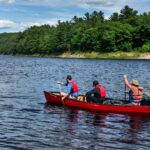
Plan Ahead: The Kennebec Ferry
SOBO hikers should plan around the seasonal Kennebec Ferry, the official route across the Kennebec River. Do not attempt to wade or swim across the Kennebec River.
More InformationSeasonal Considerations
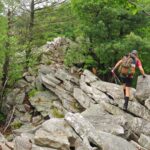


Why Hike Southbound?
There are challenges to a SOBO hike, but there are also rewards. Maine is often cited as a thru-hiker’s favorite state. In some respects, it is the wildest, most remote section of the entire Trail. It also has more lakes than almost the rest of the Trail combined. Some of the most thrilling wildlife encounters of the entire A.T. are likely to happen here: seeing a moose or hearing the haunting call of a loon. Don’t rush through this wonderland.
By the time you reach southern Virginia, the traditional hiking season has likely ended. Expect to have a small number of other southbound thru-hikers for companionship. You can take advantage of a less crowded A.T. to connect with nature and enjoy the quiet simplicity of being alone in the woods.
Take extra care to stay safe on the Trail, especially if you are hiking alone.


Ready to Plan Your SOBO Hike?
A.T. Hangtags
Hangtags distributed by the Appalachian Trail Conservancy (ATC) are frequently seen dangling off an aspiring 2,000-miler’s pack, marking their intent to traverse the entire A.T.
Learn More
Register Your Thru-Hike
Choose your start date by registering with ATCamp, the Appalachian Trail Conservancy’s volunteer hiker registration platform.
Register Your Hike
Michael Rosenberg