5 Reasons to Carry a Bear Canister (That Have Nothing to Do with Bears)
More hikers are discovering bear canisters don't just protect wildlife, they can also provide flexibility and convenience on your hike.
Read More
Black bears live along nearly the entire Appalachian Trail (A.T) corridor and play an important role in the Appalachian ecosystem, helping disperse seeds and maintain balanced forests.
Please submit a report if a bear:
Your report will help reduce human/bear conflicts on the A.T. Reported bear incidents are shared with our land management partners and listed on our Trail Updates page.
Submit A Report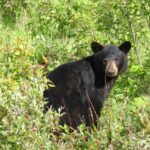
While black bears are usually shy creatures that keep their distance, access to human food can change their behavior and lead to dangerous situations for both people and wildlife.
Improperly stored food and trash or food scraps left in camp may lead to a bear becoming habituated to human food. Once habituated, bears often lose their fear of humans and can become aggressive in pursuit of human food. Aggressive bears that threaten or injure campers are euthanized.
Whether a bear is fed intentionally or unintentionally, a fed bear is a dead bear.
By using proper food storage methods such as bear canisters, hikers can help keep bears wild and protect people and wildlife on the Trail.
Bear encounters are on the rise on the Trail. Planning your food storage ahead of your overnight trip will not only help you worry less and have more fun, but it will also help protect other hikers and wildlife.
Research local regulations for the section of the A.T. you plan to visit. Food storage rules vary by land manager (e.g. national parks, state parks, national forests, etc.), especially north of West Virginia. Many areas now require specific storage methods, for example:
Georgia: Hard-sided bear canisters are required for camping between Jarrard Gap and Neel Gap from March 1 to June 1 each year.
Great Smoky Mountains National Park: Backcountry campers in GSMNP are required to hang food, trash, and scented items from provided food storage cables. You can hang your bear canister in your pack on the provided cables. Never tie ropes to your bear canister – this may allow bears to carry it away.

See if bears have been active near your planned hiking route or if your campsite is affected by any bear-related closures.
When it comes to food storage, avoid becoming complacent. Just because there have been no reports of bear activity in the area does not mean that bears are not present. All it takes is one food bag that is not properly hung to change a bear’s habits.
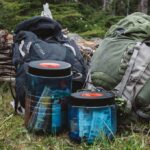
Bear canisters are hard-sided, bear-resistant containers used to store food, trash, and other “smellables” while backpacking.
Many hikers find that the benefits and flexibility bear canisters offer far outweigh the ounces they add to their packs. The ATC strongly encourages all hikers to carry a bear canister because they:

Want to try out a bear canister before buying one? There are several bear canister lending programs along the A.T. that allow you to try out a canister before buying one.
We often hear that past hikers will say that you don’t need a bear canister. Please keep in mind that the A.T. and bear populations are changing, and bear encounters have been increasing. As the Trail changes, hiker habits must change, too, to protect the Trail and the bears that call it home.
Where bear boxes, poles, or cable systems are provided, use them — but don’t rely on them. They could be full, damaged, or inoperable. There are also many A.T. overnight sites that don’t have provided food storage devices.
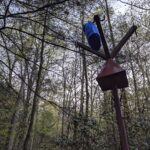
If you choose not to carry a bear canister where they are not required, be prepared to hang your food using a proper PCT-style bear hang. But beware: lack of adequate trees, the complexity of this method, and end-of-day fatigue cause frequent user error (plan for this to take at least 45 minutes once in camp). Bears have learned to defeat even the best PCT hangs in a variety of ways along the A.T.
More hikers are discovering bear canisters don't just protect wildlife, they can also provide flexibility and convenience on your hike.
Read More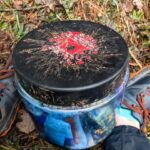
Seeing a bear while hiking can be exciting, but it’s important to maintain your distance and allow them to move on through.

In the event of a bear encounter:
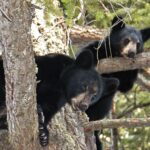
While attacks on humans are extremely rare, a startled bear or a bear who has received food rewards from humans may react aggressively. Mother bears with cubs may also act defensively.
A bear that enters a campsite or cooking area should be considered potentially dangerous. If this happens, stand your ground and:
Yes. Black bears live thoughout the Appalachian Mountains and can be found in every state the A.T. passes through. Black bears are the only species of bear on the Trail; grizzly bears do not live in the region.
While encounters are relatively uncommon, hikers should always practice proper food storage and bear safety.
Anything with an added scent or discernible, not naturally occurring smell should be considered a “smellable” and properly stored in your bear canister at night. Even things marketed as unscented/unscented formulas. This includes:
Bear canisters are required in Georgia from Jarrard Gap to Neel Gap from March 1 to June 1.
Regulations vary depending where you are on the A.T., so it’s important to be aware of local regulations before your trip.
The A.T. is changing. There are more people on the Trail than ever before. That, combined with increasing bear populations in some A.T. states (several A.T. states have seen upwards of a 500% increase in the number of bears), means that we have to adapt our hiking practices to respond to changing conditions to protect hikers, bears, and the Trail.
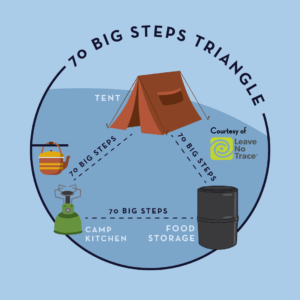 Plan out your camp using the 70 Big Steps (Bearmuda) Triangle method: where you sleep should be 70 big steps (200 feet) from where you cook and eat, and your bear canister should be 70 big steps away from where you sleep and where you cook and eat.
Make sure your canister is securely closed and locked and walk it 70 big steps away, and that’s it! Some important tips:
Learn more about the Bear Canister Lending Program.
Ursacks are certified as bear-resistant containers by the Interagency Grizzly Bear Committee (IGBC). However, the ATC has received reports of bears shredding Ursacks in North Carolina and Tennessee. On national forest land south of Shenandoah National Park and in Shenandoah National Park, Ursacks must be properly hung just like other non-bear resistant stuff sacks or in bear boxes or on bear cables or poles where provided. In Great Smoky Mountains National Park, they must be hung from the provided bear cables.
If you decide to carry bear spray on the A.T. it is critical to learn how to use it safely before you start your hike, understand when it is most effective, and understand the consequences of using bear spray incorrectly. Learn more about bear spray and how to use it here.
If a bear box, cables, or pole is available, use it! However, not all A.T. campsites have provided food storage devices. Where food storage is provided, that doesn’t mean the device will be usable when you arrive.
Bear cables require perhaps the most maintenance, and hikers have arrived at camp counting on using cables only to find them broken; additionally, in some locations flying squirrels have raided food bags on cable systems. Bear boxes are too often left with trash or discarded food items left as “trail magic,” taking up valuable storage space and attracting ants and mice. Bear poles don’t require as much maintenance but may be difficult for some visitors to use. They are also not critter proof; ATC has received reports of raccoons raiding food bags on a bear pole in Pennsylvania!
Even if the device is functional, it may be full by the time you arrive. ATC Ridgerunners this year in Georgia reported northbound thru-hikers racing to shelters each day to ensure there was space in the bear box for their food, and elsewhere along the Trail, a single large group can take up nearly all the available space in a bear box.
Have more questions? Contact us for help planning your next hike.
BearWise was developed by state agency bear biologists who wanted to make sure that no matter where people lived, played or traveled, they got the same consistent message about coexisting with bears. Visit the BearWise website to learn more about bear behavior, safety while hiking in bear country, and how to properly store food and scented items at night.
In Spring 2025, two bears that appear to have sarcoptic mange (Sarcoptes scabiei) were reported in the Triple Crown area of Virginia near the A.T. Virginia is seeing an increase in mange in black bears. Help keep bears healthy by report sightings of bears with mange to the Virginia Department of Wildlife Resources.
If you see a bear with mange along the A.T. in Virginia, please contact the Virginia wildlife conflict helpline at (855) 571-9003. Do not approach, feed, or attempt to treat the animal with medication.
Learn More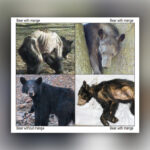
Virginia Department of Wildlife Resources