What Ridgerunners in Maine Wish Hikers Knew About Their Section
Jul 16, 2026

Jul 16, 2026

The Appalachian Trail through Maine presents hikers with memorable, rewarding, and challenging terrain. From Baxter State Park and Katahdin to the rugged 100-Mile Wilderness, this section demands preparation, good judgment, and a commitment to stewardship.
The following advice comes from Maine Ridgerunners Hailey and Kevin, who are spending this season in the Trail’s northernmost state helping hikers and protecting Maine’s unique ecosystems. Hailey and Kevin are also both returning Ridegrunners—meaning they have multiple seasons’ worth of Trail experience—and they are 2,000-milers. Their perspectives reflect their experience as long-distance hikers, common challenges they see each season, and practical lessons that can help hikers make the most of their time on the Trail in Maine.
Looking at the elevation profile of the 100-Mile Wilderness may not look as daunting as that of the White Mountains or Maine’s high peaks further south, but hikers should not assume that this section is easy. The Trail through the 100-Mile Wilderness is packed with short but punchy climbs, several water crossings, and enough rocks and roots to make any 2,000-miler’s feet sore. Combine the terrain with the lack of road crossings, cellphone service, and accommodations, and many thru-hikers—NOBO and SOBO alike—are caught off guard by the difficulty of the 100-Mile Wilderness.
Have a solid game plan. Bring extra food in case your daily mileage is shorter than you predicted. Don’t count on cell service being available every day. Check the weather before entering the wilderness because water crossings can quickly become dangerous in the event of heavy rain. The informational content available to hikers at ATC’s Monosn Visitor Center, in Millinocket, and on the ATC’s website can be really helpful for planning this section.

The 100-Mile Wilderness requires SOBOs to make important backcountry decisions early in their journey, often before they have gained significant thru-hiking experience. Although you may have reached Katahdin, you are still learning how your body, gear, and habits perform over several days. Cell service is limited, exits are few, and small mistakes can quickly become serious.
Before entering the Wilderness, test your gear and ensure you can use it effectively when tired, wet, and/or rushed. This is not the place to discover your tent is difficult to pitch in the dark or your water filter clogs quickly. Plan around the pace you can maintain, not the pace you hope for. Pack enough supplies for safety, but avoid excessive weight. Research exit points, learn how to cross streams safely, and be familiar with Leave No Trace principles.
Monitor your physical condition from the start. Address issues like hot spots or sore knees early, before they worsen. Do not leave unwanted gear, food, or trash behind; even abandoned “useful” items become someone else’s problem. Successful hikers are those who identify and resolve problems while they are still manageable.

Reaching the northern terminus may seem like a faraway dream for those hiking NOBO on the Appalachian Trail, but for many that dream does become reality. Katahdin is in Baxter State Park where the preservation of wilderness is prioritized over recreation. It’s unlike any other part of the A.T., and camping in the park the night before climbing the mountain requires planning.
There are resources available for hikers to read and learn about Baxter State Park on the ATC’s website, at the Monson Visitor Center, and from the Park’s A.T. Ranger who staffs the spot where the A.T. enters the park. For NOBO hikers, the park provides a camping area called the Birches—a space for 12 thru- or section-hikers to stay the night before climbing Katahdin. SOBOs can reserve a campsite at one of the many campgrounds in the park on a night that aligns with when they want to begin the Trail.
Having a plan to leave the park is also important as there is little cellphone reception in the park and the closest town is 20 miles away. A.T. hikers doing their part to respect Katahdin and the staff who care for the park goes a long way in ensuring the future of the A.T. for generations of hikers to come.
Do not assume a rope strung across a ford is safe or meant to be used. You do not know who placed it, how old it is, what condition the rope is in, or whether the knots and anchors can hold under force. Federal and state agencies do not generally install informal ropes across river fords, and an abandoned rope can create false confidence in a dangerous place.
Using a rope might seem safer, but it can make a crossing more dangerous. If you fall while holding or clipped to a rope, the current can pin you, pull you off balance, or stop you from recovering downstream.
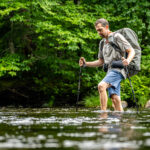
Use proper river-crossing techniques: unbuckle your hip belt and sternum strap, keep your shoes on, face upstream or a little to the side, use trekking poles or a sturdy stick for balance, keep three points of contact, move slowly, and cross where the river is widest, shallowest, and calmest. If the crossing feels unsafe, wait, turn back, or find an approved alternate route.
Sometimes people put up ropes to help, but those ropes can turn a difficult crossing into the reason a hiker’s trip is delayed or ended.
Chris Galloway/Horizonline Pictures
Ridgerunners regularly find smoldering and sometimes active fires left behind in the woods. Along the Maine A.T. corridor, fires are permitted only in designated fire rings at shelters. If you choose to build a fire, you are responsible for making sure it is completely out before you leave or go to sleep.
This takes more water and time than most people expect. Plan to use at least three liters of water, stir the ashes thoroughly, break up the coals, and check for heat. Repeat this until the entire fire pit is cold to the touch. If you do not have enough water to fully drown the fire, do not build the fire.
A fire that looks “mostly out” is often still alive under the ash. In the 100-Mile Wilderness, even a small wildfire can take a long time for firefighters to reach and contain. What takes only a few minutes to prevent can become a slow, difficult emergency for everyone who must deal with it after you leave.

Laurie Potteiger
For NOBOs, Katahdin marks the end of the footpath, but it does not immediately resolve the physical, emotional, and social changes that come from a long-distance hike. Returning to ordinary life can be more difficult than many hikers expect. For months, your daily routine has been clear: walk, eat, rest, and repeat. You have also been surrounded by people who understand the world you have been living in. When the hike ends, that structure can disappear quickly.
After the Trail, some hikers isolate themselves. Others feel restless, low, irritable, or uncertain about what comes next. Many also struggle physically as their appetite remains high while their daily mileage decreases. These challenges are common and easier to manage with a plan.
Before you finish, think about how you will handle the transition. Stay connected with people who understand what the Trail meant to you, including your tramily and fellow hikers. Let them know you are thinking of them, and remind them they do not have to navigate the return alone. Keep moving, even if your walks are shorter, and give your body and appetite time to adjust. If coming back feels harder than expected, ask for help early. Reaching Katahdin is an ending, but learning how to live with the person you became on the Trail is part of the journey as well.
Whether it’s you’re finishing up or just getting started, the 100-Mile Wilderness is unparalleled in its beauty, and unlike anywhere else on the Appalachian Trail. My last piece of advice is to enjoy it, take it all in. Swim in one of the many ponds, hike that extra 0.3 to a viewpoint, and add a handful of fresh wild blueberries to a packet of oatmeal (but don’t forget to leave some berries for the birds).
It might be a bittersweet ending or a tough first 100 miles. Either way, enjoy the nature around you.

Learn more about the Ridgerunner program and how you can support or even join this essential effort: