Help Prevent Wildfires This Spring
Jan 22, 2026

Jan 22, 2026
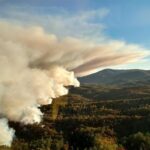
Spring wildfire season is right around the corner, and the National Interagency Fire Center predicts that “the southern half of the U.S. will have above normal significant fire potential overall.” Combined with the downed trees left by Hurricane Helene in Fall 2024, this means that it is more important than ever that Appalachian Trail (A.T.) hikers are extremely careful when it comes to campfires.
To help protect the A.T. landscape, wildlife, and other hikers, take extra precautions with campfires and camp stoves:
Check our Trail Updates page to see if any closures, burn bans, or other alerts are posted for your area of the Trail. Visit https://smokeybear.com for more tips on preventing wildfires
Don't Be That Guy: Minimize Campfire Impacts (Part 1)
Don't Be That Guy: Minimize Campfire Impacts (Part 2)
Learn what to do if you encounter a wildfire along the A.T. or see/smell smoke.
Wildfire Safety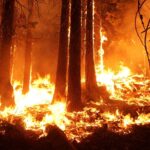
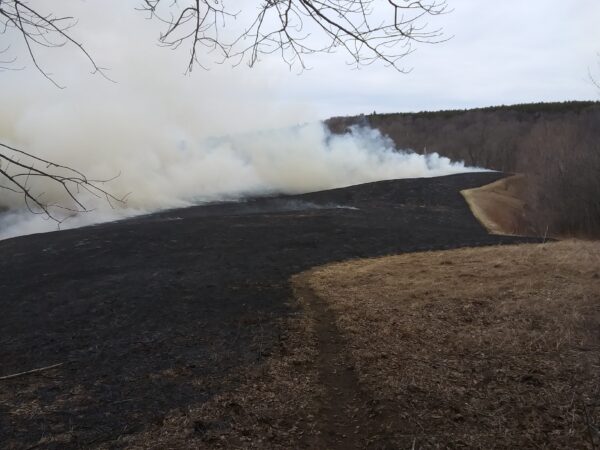
The Trail being used as a fire line as part of a prescribed burn in Vermont. Photo by Matt Stevens.
Prescribed burns are planned, controlled burns done by trained firefighters and land management agency personnel (U.S. Forest Service, National Park Service, etc.). Prescribed burns are important tools for preventing wildfires by burning fuels in a controlled way before disaster strikes. Prescribed burns also help control the spread of disease and invasive species, maintain critical habitat, renew soil nutrients, and more.
Read more about prescribed burns and their benefits on the U.S. Forest Service website.
Prescribed burn season on the A.T. is typically in the spring before “leaf out” (when deciduous tree leaves unfurl) and during fall after leaves have fallen. Most burns are implemented in national forests and large swaths of National Park Service land in Georgia, North Carolina, Tennessee, and Virginia (including Great Smoky Mountains and Shenandoah National Parks), Vermont, and New Hampshire.
Check for planned prescribed burns on our Trail Updates page.