Collaborating to Conserve the A.T. Landscape

Jan 22, 2026

Jan 22, 2026
The Appalachian Trail Landscape Partnership is strengthened by committed partners who lead by example. The National Parks Conservation Association is a proud sponsor of the Appalachian Trail Landscape Partnership, helping unite conservation leaders around a shared vision: protecting the lands and communities that sustain the Trail from Georgia to Maine. Their leadership shows what’s possible when partners invest in collaboration—and it’s an invitation for others to join in making lasting conservation impact.
Jeff Hunter, Southern Appalachian Director at the National Parks Conservation Association (NPCA) and member of the ATLP Steering Committee, shares his passion for the A.T. and why investing in the ATLP is important to his efforts at NPCA and across the landscape to protect and connect the mosaic of forests, fields, farms, parks, and trails that make up the iconic and ecologically critical A.T. landscape.
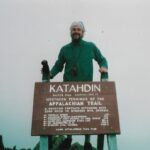
Twenty-five years ago, I had the privilege and good fortune of thru-hiking the Appalachian Trail (A.T.) from Georgia to Maine. At the time, I was living in Warwick, New York, just a short distance from numerous A.T. trailheads in places like New Jersey’s Waywayanda State Park (such a great place name!) and New York’s Wallkill River National Wildlife Refuge. The park is a great place to swim, camp, hike and see wildlife like black bear, and the refuge is about the only place along the entire length of the Trail where (in winter) you can see rough-legged hawk, northern harrier, and short-eared owl.
The Wallkill River NWR served as an invaluable refuge for me personally. It was a place where I could retreat to unwind and de-stress from my corporate job in all seasons. There, I could take in the fresh air, the sound of birdsong, the slap of a beaver’s tail, or the cry of a red-tailed hawk. Winter provides opportunities for cross-country skiing in the cold, clean air. Spring heralds the arrival of migratory songbirds. Summer offers opportunities to encounter reptiles and amphibians. And the fall colors never disappoint.

Jeff Hunter on his thru hike in 2000.
Another place I loved hiking is Sterling Forest. Partially located within the Town of Warwick, some of the earliest sections of the Trail were built in this forest, which is less than one hour from New York City. This was the first place I participated in citizen science in the form of breeding bird surveys and herpetological studies. Those studies were important steps in protecting this special place.
Today, hikers who pass through this section of the Trail are hiking in Sterling Forest State Park. Some are likely unaware of the protracted effort to successfully protect this 22,000-acre forest from development. The private owners of the forest once sought to build 14,000 houses, creating three new hamlets and eight-million feet of commercial office space—twice the size of Gateway Arch National Park.
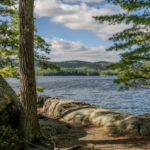
Sterling Forest State Park Courtesy of NYS Parks
Because of the foresight and hard work of many, including the Open Space Institute (OSI) and the Trust for Public Land (TPL), these private lands were acquired and permanently protected in 1998. Today, because of these successful conservation efforts, the A.T. through Sterling Forest is buffered from development. As a result, the viewsheds and soundscapes of the Trail are protected because of the creation of this new state park. Wildlife habitat and clean water resources are also protected, as are cultural resources like the historic furnace at Sterling Iron Works, one of the earliest places where steel and iron were manufactured when the United States was a new nation.
In 2003, I left my beloved Hudson Valley and the corporate world for a career in non-profit conservation. Today, I work for National Parks Conservation Association and live in Western North Carolina, once again, not far from numerous A.T. trailheads including Sam’s Gap on the Tennessee–North Carolina border.
In my capacity as Southern Appalachian Director, I’m proud to represent NPCA on the Appalachian Trail Landscape Partnership (ATLP) on both the steering and conservation committees. And NPCA is proud to sponsor the ATLP’s annual meetings. Like the effort to protect Sterling Forest, the ATLP is a large-landscape conservation initiative seeking to protect lands and waters surrounding the trail from Georgia to Maine. An effort of this scale and importance can only succeed through sustained collaboration.

Today, Jeff Hunter resides near the Trail in Western North Carolina.
The land trusts and other conservation organizations like the Appalachian Trail Conservancy, TPL, and OSI that comprise the ATLP are in a race against time to protect land surrounding the Trail before development permanently eliminates opportunities for conservation. The ATLP provides a conservation vision to connect and protect the A.T. Landscape, supported further with funding through the Wild East Action Fund. This fund, administered by the ATC in support of the conservation efforts of the ATLP and its partners, provides vital resources for land protection and conservation planning.
Conservation initiatives like the ATLP do not just benefit the A.T. day hiker, section hiker or thru-hiker. Trail towns like Hot Springs, North Carolina, Damascus, Virginia, and Monson, Maine to name a few, benefit by ensuring both economic vitality and quality of life for their residents. Wildlife is another important beneficiary. By protecting and maintaining a wide variety of habitats, conservation helps ensure appropriate resources like food, shelter, and breeding grounds are available to species moving throughout the landscape.
As we begin 2026, I want to express my gratitude for my partners, including those at the Appalachian Trail Conservancy. I am also grateful for the generosity of the donors who contribute their hard-earned money to support the protection of the Trail that we all love.
Whether you hike the Appalachian Trail or not, we need your support to protect the Trail for future generations. As we think about the year ahead, please consider joining me in supporting the work of the ATLP by donating to the ATC or one of the organizations that are working for the common cause to ensure the protection of the Trail and greater landscape for future generations.
[CnP.Form Donation-Form-One-Time-Button]
Jeff Hunter is the Southern Appalachian Director at the National Parks Conservation Association.
Your gift for the A.T. will go 2x as far with the 2,000-Miler Match!
A group of 2,000-Milers are matching every gift made to the ATC up to $101,000 before 3/31.
Give Now