Training Modules
For the following Field Leadership training modules you will need the companion resource: Field Leadership Handbook.
Tips for Safety Session
One way many trip leaders introduce safety sessions for volunteer participants before they start is to outline the priorities for the day in this way:
- Be Safe: Primary to the role of any work trip is to come home safely at the end of the day.
- Have Fun: Secondary to that, we hope volunteers have a great time, so they want to come back.
- Get the Job Done: “We want to get the job done, but not at the expense of safety. We can always finish the project another day.”
BE SAFE
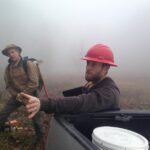
A good tailgate safety session doesn’t need to take long, though it should cover the essentials. This post includes a mnemonic device to help frame your next safety briefing, an easy way to introduce safety talks for volunteers, and a video with sample tailgate safety session topics. In your next safety briefing…
B: Bearings
Provide an orientation to the day’s planned activities. This allows participants to “get their bearings” on the location of the work, the purpose and intended outcomes, and any squads or assignments for specific volunteers.
E: Environmental Considerations
Detail environmental conditions that may impact work, including weather, wildlife (including ticks), poisonous plants, hypothermia, sun exposure, trail conditions, overhead hazards, strenuous hikes, high water crossings, or flood dangers.
S: Safety First
Review the tasks to be accomplished, hazards associated with the tasks and ways to mitigate those hazards; refer to appropriate job hazard analysis (JHA) references.* This is also a good time to make sure everyone has appropriate footwear, clothing, lunch, water, gloves, and sunscreen. During any tool safety overview, stress proper tool handling, safe working distances between volunteers, and proper ergonomics to reduce injury. Remind participants to drink plenty of water throughout the day, even if they don’t feel thirsty.
A: Accountability
Everyone is responsible for ensuring a safe work environment. Volunteers should be empowered to vocalize safety concerns that they see. This extends into being aware of others or announcing yourself when you’re going to pass through a work area so that work can pause.
F: Freedom to Disclose
Let people on your crew know that if they have any health concerns they want to be sure you know about they can talk to you after the safety session. These might include back problems, allergies (insects, plants, medication), diabetes, heart or lung problems, or epilepsy.
E: Emergency Response Plan
Explain the emergency procedures in place for this crew and any communication devices. Assess the levels of first aid or medical training within the group and the location of the closest hospital. If the crew will bushwack to the work site from the parking area, be sure to adequately flag the route in the event of an emergency. Make sure that people who drove communicate where their keys are located. (Template available below.)
Segments of a recent Natural Bridge Appalachian Trail Club tailgate safety session.

Pro Tip
Trip leaders who facilitate volunteers in a circle to each provide a safety tip along with either a warm-up stretch or joke allows new and experienced participants to more fully engage in and contribute to a culture of safety.
Leaders who employ this approach are advised capture any hazards not previously mentioned, using JHA(s) as reference.
Resources
- Field Leadership Handbook
- Request Field Leadership Hangtags for Tailgate Safety Briefing, Ongoing Work Day Safety, Leadership Checklist, and Tool Talk
- Work Trip Roster
- Emergency Response Plan
- Recommended First Aid Kit Supply Lists
- Trail Safe! training (online, ~3 hours)
Essential tools for planning your next A.T. project from start to finish:
Volunteer Injury Packet
In the event of an accident, this toolkit helps you file a claim. Each volunteer should carry an injury packet with them for any volunteer activity.
The packet includes information about dealing with injuries suffered by A.T. volunteer workers. We recommend that a paper copy of this packet be carried by each A.T. volunteer work leader. Volunteers should be familiar with the contents of this packet, and should complete specific local contact information on the “Explainer” sheet before an accident resulting in injury occurs.
Download Volunteer Injury PacketSteps to Follow in Case of Injury
If an injury occurs, a volunteer should follow this flow chart or steps below:
- Immediate care and First Aid, and/or treatment at a medical facility.
- Complete the A.T. Volunteer Injury/Near Miss Form in advance of calling the land manager.
- Call the land manager no more than 24 hours after event to report and extend volunteer protections. Ask the land manager to submit a CA-16 to the medical facility if a workers compensation claim will be filed.
- Send the A.T. Volunteer Injury/Near Miss Form to ATC (volunteer@appalachiantrail.org), your ATC regional office, and land manager (if requested).
- Follow-up