Clothing
Hope for the best weather, but pack for the worst.
Clothing to protect you from cold and rain is a must, even in midsummer and especially at higher elevations. If you’re hiking with a partner, don’t forget that some items can be shared to lighten the load!
Avoid Cotton Clothes
This is particularly true in chilly, rainy weather, which can strike the mountains at any time of year. Wet cotton can be worse than nothing and can contribute to hypothermia, a potentially fatal threat, because cotton holds water and has no insulating properties when wet.
Instead, opt for synthetic fabrics such as polypropylene and various acrylic blends or natural fibers such as wool or silk. Wool has the added benefit of still providing insulation when wet and does not hold smell like synthetic fabrics.
Layer Your Clothes
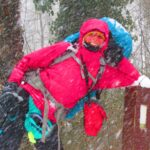
Since hiking will make you sweat no matter the weather, shedding layers enables you to regulate your body temperature more effectively than choosing between keeping a heavy jacket on or taking it off.
- Base layer: The layer that sits against your skin. In summer, your base layer may be just shorts and t-shirt. Keep in mind, though, that lightweight, breathable long pants and shirts will provide better protection from ticks and the sun. In winter or colder weather, your base layer may be a lightly insulated long sleeve shirt and long johns.
- Base layer clothing should be lightweight and moisture wicking. It should also dry quickly.
- Insulating layer: The layer that provides you with the most insulation against the cold. In summer, you may only have one insulating layer, like a fleece sweater or a puffy down jacket. In winter, you should carry both and add an insulating layer for your legs.
- Outer/rain layer: This layer provides a waterproof barrier and is essential no matter the season or the weather. Most hikers opt for a lightweight raincoat with a hood, though some prefer a poncho or even a hiking umbrella (though keep in mind these may be hard to use in areas with thick vegetation).
- In winter, you may want to use a waterproof insulated jacket
Footwear
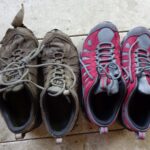
When it comes to footwear for hiking, the most important thing is that your shoes fit well and are broken in.
Nothing spoils the fun or ends a hike quicker than blistered feet. On a day hike, broken-in tennis shoes can be a better choice than brand-new boots. When carrying a backpack or hiking on rocky terrain, more substantial hiking shoes or boots may be desirable, but lightweight trail runners are quite popular.
Footwear tips from ATC staff:
- Shop for hiking shoes in the afternoon as feet swell throughout the day.
- Thru-hikers can expect their feet to expand over the course of their hike, so if you are between sizes, choose the larger size.
Many A.T. backpackers bring “camp shoes” to wear at the end of the day while eating dinner and getting ready for sleep. Camp shoes are optional, but many hikers love to have dry, comfy shoes to wear around camp and to quickly slip on and off in the middle of the night if needed. Crocs, sandals, and water shoes are all popular options.
First Aid Kits
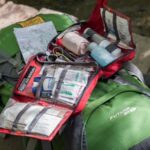
A first aid kit is essential on any hike. What you put in your kit may depend on a variety of factors including the length and duration of your hike, the terrain, whether you’ll be out overnight, and the time of year. A kit for a short day-hike can be pretty simple and can be purchased as a pre-packed unit.
Where to Find Suggested First Aid Kit Checklists
- American Red Cross Hiking & Backpacking First Aid Kit
- American Hiking Society Personal First Aid Kit
- How to build a hiker’s first aid kit by the Washington Trails Association
Remember, a first aid kit is only part of the 10 Essentials. Being prepared for a hike that is within your capabilities, with the appropriate gear and clothing and a well-thought-out plan that is shared with others, is part of staying safe and healthy.
Even if you are an experienced and fit hiker not prone to injuries, consider that what you are carrying may be able to help someone else.
A wilderness first aid class is recommended for anyone doing an extended hike or leading a group of hikers.
The Big Three for Backpacking
Your pack, personal shelter, and sleeping bag make up the “big three” of your backpacking gear. They are often the biggest, heaviest, priciest, and most important pieces of equipment you’ll carry while backpacking. Choosing gear that’s right for you can make all the difference.
When picking your gear, remember that it is just as important to not skimp on the gear you need to stay safe as it is to keep your pack weight down to prevent injury. Modern gear innovations make it easier each year to keep a light pack while bringing the 10 Essentials.

Base Weight
Base weight is a common measure used to determine the “true” weight of your pack. Base weight refers to the weight of your pack with all of your gear, minus consumables; most commonly food, water, and fuel. The amount of consumables you carry will vary throughout your hike since you’ll carry different amounts between resupply stops and, of course, you’ll eat through your food as you hike.
So, when we talk about pack weight, base weight is really what we are getting at (though it’s important to carry the appropriate amount of food and water, too. Visit our food and water pages for more info).

Bear Canisters
When planning your A.T. backpacking trip, it can be easy to get caught up in getting your pack as light as possible. Remember to not cut essentials to save weight, though, and bear canisters are the best way to keep yourself, other hikers, and bears safe on the Trail.
Modern gear has become light enough for hikers to carry a bear canister while keeping their base weight low. More pack brands are also making packs to accommodate canisters.
Remember, you have to be prepared on the A.T. for changing conditions. With bear populations and the use of A.T. both on the rise, it’s up to every hiker to do their part to prevent bear encounters.

Choosing the Right Sleeping Bag
The final of the “big three,” your sleeping bag and sleep system are critical for having a safe trip on the Trail and sleeping in comfort. We put together this blog post to help you make the best decisions for your sleep needs and type of trip you’re planning.
Frequently Asked Gear Questions
There are tons of reliable, Trail-tested gear companies out there, from international brand names to small cottage companies. Our friends at The Trek have some great content about what brands are popular among long-distance hikers. The Trek’s A.T. Thru-Hiker surveys have several sections devoted to footwear and gear.
There is no one-size-fits-all for any piece of gear. We recommend trying clothes, packs, and shoes in person when possible, to find the gear that’s right for you.
There are almost as many places to buy gear as there are gear brands! Many Trail towns have outdoor outfitters with a wide selection of gear. There are also larger, national retailers and a ton of online gear stores.
It’s worth going to a dedicated outdoor store or outfitter for larger pieces of gear, especially the big three (pack, personal shelter, and sleeping bag). Other items can be bought elsewhere, often for less. Many large chain stores have camping sections where you can purchase water filters, stove fuel, and more. Discount clothing stores now have large selections of athletic wear, too, most of which will work on the A.T.
And don’t forget consignment, thrift stores, and your local online marketplace or Buy Nothing group! You can find some great deals right in your local community.
Some places let you rent gear for low or no cost so you can try things out before investing in gear of your own! University outdoor clubs, some outfitters, and many libraries now rent outdoor and backpacking gear.
The ATC maintains affinity lists of people who have recently completed hiking the entire A.T. (or large portions of it). They are willing to share their experience and give advice on a variety of topics, including gear, and from a variety of experiences. The lists themselves are not currently available online, but you can e-mail info@appalachiantrail.org to request a copy. Available affinity lists include, but are not limited to:
- Alternative Thru-hikes – Flip-flop, leapfrog and other non-traditional thru-hikes.
- Canadians – Hikers from Canada.
- Cancer Survivors – Hikers who were in recovery or undergoing treatment while hiking.
- Couples – Couples that hiked the Trail together—including honeymoon hikers.
- Day-hike/Slackpackers – Hikers who spent few or no nights on the Trail and had logistical support.
- Diabetic Hikers – Includes insulin-dependent diabetics.
- Disabilities and Injuries – Hikers with heart disease, food allergies, scoliosis, kidney transplants and other physical conditions requiring special attention.
- Dog Owners – Hikers who hiked the Trail with their dogs.
- Early Starters – Primarily northbound hikers who began in January and February.
- Families – Families of three or more who completed the Trail together, including with young children.
- General – Includes a selection of northbound, flip-flop, and southbound thru-hikers as well as section-hikers.
- International – Currently includes hikers from Australia, England, Finland, Germany, Israel, Japan, New Zealand, Norway, Scotland, South Africa, Switzerland.
- Late Starters – Northbound thru-hikers starting in Georgia in May or June.
- Lightweight – Hikers with pack weights ranging from 12 – 30 lbs.
- Lyme disease – Hikers who contract Lyme disease or other tick-borne illnesses.
- Military Veterans – Including hikers injured during military service.
- Over 55 – Current age range on list: 55 – 77.
- Section Hikers – Hikers who have taken more than 12 months to complete the Trail, ranging from 2 to 20 years or longer.
- Slower Hikers – Hikers who took more than 7 months to complete a thru-hike.
- Southbound – Hikers traveling end-to-end from Maine to Georgia.
- Vegetarian/Special Diet – Vegetarians, vegans, and hikers who dehydrate their own food.
- Winter – Hikers with winter backpacking experience; primarily southbound and alternative thru-hikers.
- Women – Current age range on list: 23-62.