How Does Federal Funding Support the Appalachian Trail?

Jul 23, 2026

Jul 23, 2026

When most people think about the Appalachian Trail, they picture sweeping mountain views, swift flowing creeks and rivers, and wildlife. We see all that and more: the Cooperative Management System, our network of public-private partnerships and federal support that underpin the Trail’s protection. One of the things that fuels cooperative management is federal funding.
To the average Trail visitor, it may not be obvious how a volunteer is recognized for their contributions, how the Konnarock Crew is deployed to Hurricane Helene recovery projects, or how hundreds of projects move from concept to completion. But behind the scenes, “limited financial assistance,” as provided for in the National Trails System Act, is key to making all these and more things happen. Without reliable federal funding, the Appalachian National Scenic Trail would be noticeably different from what its millions of visitors know and love.
The National Park Service (NPS), USDA Forest Service (USFS), and state land managers work together with the ATC and the 30 local A.T. Maintaining Clubs to steward the Trail. This partnership between land managers, A.T. Clubs, and the ATC is called the Cooperative Management System. As a unique unit of the National Park System, the Appalachian National Scenic Trail is unlike other “square” National Parks. The A.T. requires an expansive approach to management to ensure every inch of the Trail is reliably cared for.
First and foremost, the A.T. needs federal funding to support the NPS staff positions that are directly assigned to the Trail as well as the various positions throughout the NPS and USFS where civil servants (career federal employees) collaborate with the ATC, volunteers, and each other in order to care for the Trail. Our dedicated agency partners are unsung heroes of the A.T., with ultimate responsibility for the lands and resources (plants, animals, views, etc.) that constitute the Trail. They help the ATC and volunteers design and implement the priority projects as well as help us work with the connected forests and parks.
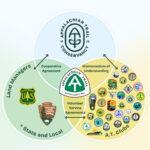
Despite conventional thinking, the volunteer labor of the A.T. (valued at $5.4 million) does not come free, either to the government or to volunteers. In addition to the federal investment in our civil servants who support this partnership, the training, equipment, and coordination of volunteers so they can maintain the standard of care the A.T. requires all comes at a cost.
Most volunteers provide their own transportation and tools, but the material costs for stone, wood, rebar, and other things needed for Trail projects are provided by NPS funding. Depending on the project, Clubs may provide materials, and the NPS will often pay for tools. The A.T.’s large, dispersed, expert corps of volunteers also benefits from NPS- and USFS-funded trainings on specialized topics, such as technical guidance for invasive species treatments and sawyer skills. These trainings are led by ATC staff, contractors, or Club volunteers, but are often supported by federal funds.
Through private donations, the ATC helps public and Club dollars go further. Reliable federal funding, whatever the amount, is essentially the seed funding for the A.T.’s annual operations and is what we rely on as we seek private contributions to both fill gaps and expand programs to benefit the Trail, volunteers, visitors, and communities within the A.T. landscape. Without the federal funding, the number of projects and amount of ongoing, active management of the Trail would drop significantly.
Like other National Park System units, the A.T. is supported by federal funding laws passed by Congress (annual appropriations). Because the Appalachian Trail is so large and complex—stretching through 14 states and nearly 2,200 miles—it operates on a five-year budgeting system called capital planning. During the capital planning process, A.T. volunteers propose various projects to ATC staff and the local land managers, like NPS, USFS, or state agencies.
While volunteers identify a significant share of projects they will then undertake, some potential projects are beyond the skill of a given Club or of most volunteers in general. This is when the ATC hires contractors and trail crews to supplement local volunteer capacity. The ATC runs crews like Konnarock, SWEAT, and the Mid-Atlantic Crew with federal dollars. Contractors are often local small businesses with specialized skills, like flying materials to the top of a mountain with a helicopter so volunteers don’t have to haul them several thousand vertical feet.
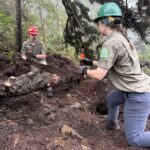
These volunteer-identified projects are then refined with the Trail’s NPS unit office, wherein expert civil servants collaborate with volunteers and ATC staff to ensure that Trail projects are well-designed and are a good use of limited NPS funds. All projects that occur on federal land—land managed by the NPS or USFS—are in the Trail’s capital plan.
Most federal funds provided to the A.T. come from federally appropriated dollars, which include taxes and federal income from sources like the Legacy Restoration Fund (funded by energy leases), customs, and other fund sources directed by Congress. Of these, the Legacy Restoration Fund has become especially important because of the steep decreases in NPS funding during the 2010s that resulted in deferred maintenance projects piling up. Some A.T. land managers have other fund sources they can leverage without Congressional approval, like receipts from timber sales in our national forests.
Another major source of funding for the A.T. is non-appropriated national park fees, such as entrance fees and backpacking permit fees from places like Acadia and Shenandoah National Parks. When an entrance fee is paid at a national park site, that park unit keeps 80% of what is charged with the other 20% being pooled within the NPS and distributed to parks that do not collect their own fees, like the A.T.
Additionally, the amount of federal funding available often depends on the type of project it is being used for. For example, more funding is available for projects like maintaining the treadway, privies, and bridges, while there may be less funding available for projects like non-native invasive species management and habitat restoration. This is because of how Congress sends money to the agencies. Supporting natural resource management at the minimum necessary level is an example of where the ATC helps fill gaps thanks to member and private support.
Cooperative management makes it possible for the A.T. to be one long trail rather than dozens of smaller trails, managed to different standards and with varying levels of volunteer or financial support. Furthermore, NPS funding supports the ATC’s work across the A.T. landscape and not just relating to the treadway or protected A.T. corridor.
NPS support is crucial for cultivating the partnerships that sustain the A.T., from the ATC’s Emerging Leaders’ Summit that brings young adults to the Trail for learning and leadership development, the Volunteer Leader Summit which convenes A.T. volunteers to learn from each other, and the Appalachian Trail Landscape Partnership, which gathers land trusts, regional organizations, and federal and state partners to advance conservation initiatives. Each of these facilitates new partners, new stewards, and new lands to join the A.T.

Tai Schroeder
As mentioned previously, federal funding is the seed money for A.T. operations. While federal funding supports many of the essential maintenance activities and partnerships that keep the Trail alive, funding is not guaranteed. Shifts in federal appropriations, whether due to lapses, shutdowns, delays, or decreased overall budget totals, have immediate and deferred impacts on the Trail.
Immediate impacts of these shifts include the furloughing of agency partners and their inability to collaborate on projects for the Trail, such as happens during a government shutdown. Delayed impacts may include the loss of NPS or USFS staff positions, decreased dollars for needed Trail projects, or higher costs for Trail work in the future. Delays in enacting annual appropriations and wild shifts in federal funding have costs to the Trail and to cooperative management. The ATC is a strong advocate for reliability in funding and partnership, as we and the volunteers show up to care for the Trail every day, no matter the conditions.
Reliable A.T. funding, from both governmental and private sources, is key to maintaining the high standard of stewardship the Trail deserves. The ATC’s federal policy team works year-round to advocate for appropriate funding and staffing support for the Trail’s federal partners. Volunteers and the ATC’s field teams support this effort by continuing to adhere to the highest standards for Trail stewardship and proposing projects that have measurable positive impacts to the Trail, its surrounding lands, and the people who visit it each year.
Which ultimately brings us back to the unparalleled and often transformational experience that A.T. visitors have on the Trail. Every time you’re awed by a protected vista, walk up a set of stone stairs, relax at a shelter after a long day of hiking, or pass by a Trail Crew at work, consider the enduring partnerships and ongoing advocacy required to protect and maintain the Trail, and remember you have a role to play in its protection.

You can help keep the Trail alive by reaching out to your Members of Congress and expressing your love for the Trail, or starting your journey as an A.T. volunteer.
Give today to get your limited-edition 2027 calendar featuring breathtaking scenes from the Trail.
Reserve my calendar