Stories of Grief, Growth, and Transformation in the Outdoors: Part Two
Nov 13, 2025

Nov 13, 2025
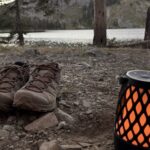
For generations, many people have turned to outdoor places like the Appalachian Trail in search of something— adventure, challenge, connection, or solitude. But for many, outdoor experiences become something more: a path toward healing. For those experiencing grief or trauma, nature offers a unique kind of medicine.
Each of the stories shared by hikers below reveals the profound ways the outdoors restores and reconnects people. This is the second part of a two-part series. Read part one here. At the Appalachian Trail Conservancy, we believe “take a hike” shouldn’t mean “go away.” It should be an invitation to come back to nature and come back to yourself. Through our Take a Hike campaign, we’re working to change the dictionary definition of this phrase to reflect what millions of hikers already know: taking a hike can change your life.
By Stuart Thompson
I have section hiked approximately half of the A.T and met some wonderful folks, both on and off the Trail: Trail angels, hostel managers who brought our ragged group ice cream sandwiches, day hikers who came to our shelter with cold drinks on a hot, sweaty afternoon. The Trail itself simply is: You accept it for the being, the actuality, the presence it is. I am reminded of a SOBO hiker we met in GA in 1991 who was called “Water.” He explained to us his self-assigned trail name as a continual reminder of how to hike the A.T. Flow with limited mental resistance around obstacles; flow gently over others. Avoid trying to muscle or bully your way down the Trail. This rather profound wisdom is, of itself, a huge boost to mental health.
My larger concern for mental health is in connection with a 2011 short section hike of the AT. I did in the Daleville, Virginia area. For five years prior to that 2011 hike, I had been writing a series of short stories on hiking, rock climbing, caving, and canoeing, with the idea that I would give this collection of stories and lessons learned to my daughter. Most of the stories were of the A.T., some of the Grand Canyon, and many trails in Pennsylvania. I had determined that thoughts on that 2011 hike would constitute my last story for the collection. Then the phone rang: “Stu, our daughter was killed last night in a vehicle crash,” came the panicked voice.
The writing stopped. Weeks later, I picked up the pieces. I finished that last story and just stopped. I went into a long mental stare. The stare dissipated, but not the psychological association of hiking with the death of my daughter. To this day, I reflexively associate hiking with an impossible loss. My wife and I now hike essentially every other week or so, mostly on local trails but also on the A.T. On every hike I think of my daughter.
What helps is talking about loss. I did just that a couple months ago at a Keystone Trails Association (KTA) weekend conference, during which I discussed the book of stories and lessons learned. Besides providing me with an emotional outlet to process my loss, I was pleasantly surprised to have more than one person come up to me after the presentation to tell me that what they had just heard was of significant help to them. I told each of them to write. Just write. Put down any words that come to mind and go from there. Positively externalize your loss and pain. People care.
My late wife and I section-hiked the entire Trail twice, first as a young couple, and later with our two daughters. My wife’s death in July 2000 devastated me. The Trail was our refuge and inspiration. Only by returning to the A.T. was I able to assuage my grief. This is captured in my novel, Murder on the Appalachian Trail (Belle Isle, 2025).
John McGowan
By Jonathan Bird
I thought I understood pain before I stepped onto the Appalachian Trail. I didn’t. The miles have a way of stripping you down—physically, emotionally, and mentally—until all that’s left is who you really are. From the first day, standing in the rain at Amicalola Falls, I felt the weight of the pack and the silence of the forest pressing into me. Nine miles to Springer Mountain felt endless, but the joy of finally turning this dream into reality made me forget the ache for a moment.
There were lessons to learn every day—like crossing the Kennebec by canoe with Starbird, the ferryman, the river smooth but powerful beneath us. I thought of how the Trail forces you to trust—your body, strangers, or luck. That’s how the Trail works: it breaks you down, then gives you just enough to keep going. “The Trail provides” is a popular refrain.
My body was in revolt—blisters, aching knees, pain crawling up my spine. Rain came more often. Cold mornings blurred into muddy afternoons. I stopped counting blisters. My legs felt carved from stone, and my back screamed every night. When the pain was too much, I remembered the good moments—the Kennebec crossing, or the early mornings when mist hung low and the world was quiet. But most days were just grinding endurance.
As we pushed north, the Trail felt like an endless test. Every steep climb—the White Mountains, Mahoosuc Notch, the slick roots of Maine—was another chance to quit. But I didn’t. Some mornings, I couldn’t even lace my boots without wincing. But there was something honest in that pain.
When we reached the 100-Mile Wilderness, I thought the hardest part was over. It wasn’t. That stretch broke me open. My body hurt in ways I can’t describe. Every step felt like an argument with myself. But it was also the loneliest and most beautiful part. The lakes mirrored the sky, loons called in the distance, and I realized how small I was in all this space.
Reaching Katahdin felt surreal. The climb was amazing—warm, with no clouds or wind. When I finally touched that sign, I didn’t feel triumphant. I felt empty, drained, and quiet. I thought I’d cry, but instead I just stood there, breathing hard, letting the mountain take whatever was left of me.
Coming home was the strangest part. My body didn’t know how to stop moving. My feet ached for the Trail, but my mind replayed the pain—the cold mornings, the heavy pack, the arguments, the loneliness. Yet beneath it all was something else: a new kind of strength. The Trail didn’t heal me; it didn’t make life easier. But it taught me that I can keep going long after I think I can’t. It showed me that pain is not the enemy—it’s proof that I’m still alive, still trying.
Every step hurt. Every mile demanded more than I wanted to give. But out there, stripped of comfort and ego, I found a strange kind of peace. Suffering became the teacher. And though it nearly broke me, it also rebuilt me—slowly, painfully, honestly. Because what doesn’t kill you doesn’t just make you stronger. It makes you real.

Jonathan Bird
Each step on the trail tells a story. For some, it’s a story of joy and discovery. For others, it’s a story of loss, endurance, or renewal. These stories serve as a reminder that trails are more than simple footpaths—they’re lifelines.
The hikers who shared their journeys here found strength and solace in the same mountains, forests, and valleys that connect us all. Their stories redefine what it means to “take a hike”—not to walk away from the world, but to walk through it with hope.
Join us at takeahikepetition.org and help us change the meaning of “take a hike” to reflect the ways that hiking can help us heal.

Your gift for the A.T. will go 2x as far with the 2,000-Miler Match!
A group of 2,000-Milers are matching every gift made to the ATC up to $101,000 before 3/31.
Give Now