5 Things Ridgerunners Wish You Knew About Trail Magic
Jun 25, 2025

Your gift by 12/31 will be matched! Double your impact, and be entered for a chance to win new gear prize packages. →
Jun 25, 2025
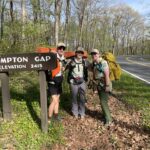
Trail magic is a concept that was born on the Appalachian Trail (A.T.) and commonly refers to:
Although trail magic is always well-intentioned, over the last few years there has been a noticeable increase in the amount of food and drinks left behind on the Trail. This form of trail magic has caused unintended negative consequences on the A.T. and for the people who care for it.
Ridgerunners and volunteers are spending more of their time hauling out trash instead of maintaining the Trail we all love. Reports of food-conditioned bears are also on the rise — these are bears that have accessed human food, causing them to lose their natural fear of humans. Most often this happens through improperly stored hiker food. Seven A.T. shelters have been closed thus far in 2025 due to escalating hiker encounters with food-conditioned bears.
The Potomac Appalachian Trail Club (PATC) reports that A.T. Ridgerunners are finding 3-4 times the amount of trash they encountered last year, with much of the added volume due in part to unattended trail magic in the backcountry.
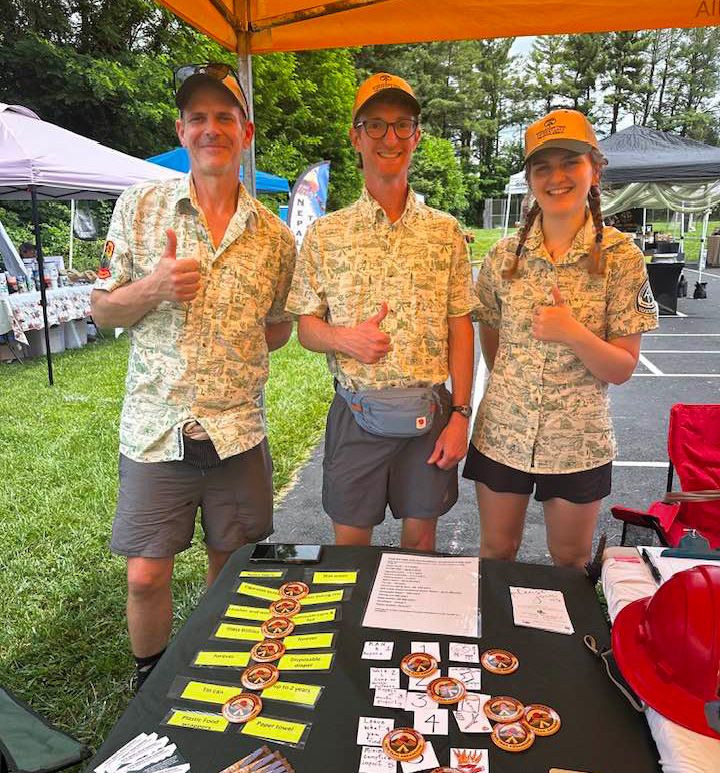
Photo detail: PATC Ridgerunners at this year’s Loudon A.T. Festival. PATC maintains 240 miles of the A.T. from the southern end of Shenandoah National Park to Pine Grove Furnace State Park in Pennsylvania (with help from the Mountain Club of Maryland for a stretch in MCM’s home state). PATC’s Ridgerunners live and work all along some of the busiest stretches of the entire A.T. during the hiking season. Photo courtesy of PATC.Here are five things that this year’s PATC Ridgerunners want you to know about food and drinks left along the Trail and at road crossings and how you can support hikers and the A.T.
Even coolers that are picked up at the end of the day present a risk to wildlife. Bears are incredibly smart and tenacious in their search for food. Some bears have even learned to wait for hiker food to be left unattended before running up and grabbing it. Food, scented items, and trash left unsecured for any amount of time can attract wildlife on the Trail, even those left behind at trailheads.
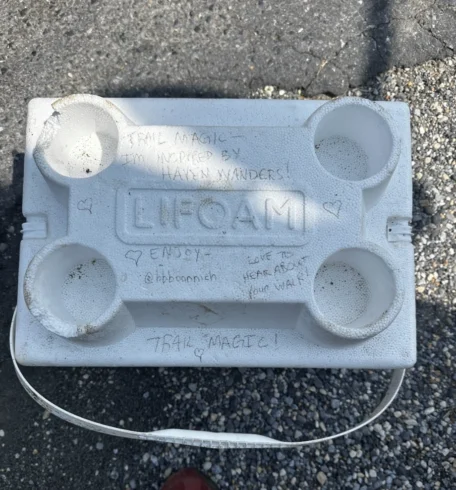
This cooler and “trash bin” had food that could spoil or attract wildlife, so the Ridgerunners had to call the land manager to remove it. If land manager staff aren’t available, A.T. Club volunteers will often assist or sometimes the Ridgerunner will circle back with their vehicle once their patrol is over – adding extra work that takes away from their time maintaining the Trail.
Photo by Soulslosher, Maryland Ridgerunner and Caretaker

As bear populations increase in every A.T. state, it’s even more important to protect bears by preventing them from getting hiker food. Bears that lose their natural fear of humans may have to be removed or, in extreme cases, euthanized.
This abandoned cooler was hauled for several miles by the Ridgerunner from a shelter in northern Virginia. Unattended food is not very magical when it becomes trash, a danger to wildlife, and extra work for Ridgerunners.
Photo by Lightfoot, PATC Northern Virginia Ridgerunner.
Offer food and drinks to hikers in person. When doing this, choose off-Trail, developed sites like a state park or spot in town. Do not set up in remote sections of the A.T. to help maintain the Trail’s wild character and keep those more fragile areas pristine. Always call state parks and businesses ahead of time to make sure it’s ok for you to set up there.
A.T. regulation note: Because of the risk unattended food and drinks pose to wildlife, it is illegal along almost the entire Trail to leave food unsecured. And it is illegal almost everywhere on the Trail to leave anything behind or unattended, even non-food items. This means that Ridgerunners often must report these items to land managers who remove them (or to the local Club who removes them on behalf of the land manager). Land managers are the agencies that own the land the Trail passes through, and they set and enforce regulations. Land managers along the A.T. include the USDA Forest Service, National Park Service, state parks, and more.
Most coolers and food left are never picked up by the person who left them, and they quickly turn into unofficial trash cans. Hikers either think that the cooler will be picked up soon and add their own trash, or hikers aren’t familiar with Leave No Trace and assume the coolers are acceptable places to leave their trash. These quickly become unsightly miniature dumps along the otherwise beautiful A.T. and pose a risk to wildlife.
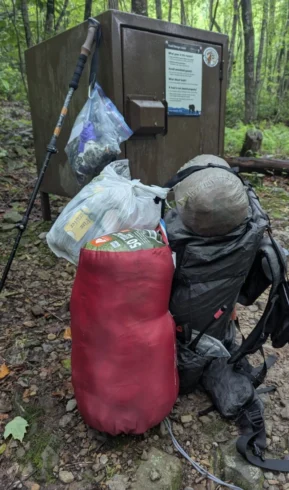
This is a Ridgerunner’s kit after only a few days. What we see: a 1-gallon bag on their trekking pole of mostly microtrash from along the Trail, campsites and a firepit; a 3-gallon grocery bag of unattended “trail magic”; and an abandoned sleeping bag left at a hut.
Photo by Mosey, PATC Shenandoah Ridgerunner.
Pack out trash, which accumulates most at trailheads and shelters. You can even offer to take out other hikers’ trash, too! Trash cans are rarely found along the A.T., and hikers often must carry an ever-larger bag for days. An offer to help lighten their load may be a welcome form of trail magic for many long-distance hikers!
Bear boxes are meant to be easy ways to keep hiker food safe from bears and other critters. Imagine the disappointment you’d feel after a long day of hiking at opening a bear box only to find rotting food or unappealing pantry staples (many of which hikers are already carrying).
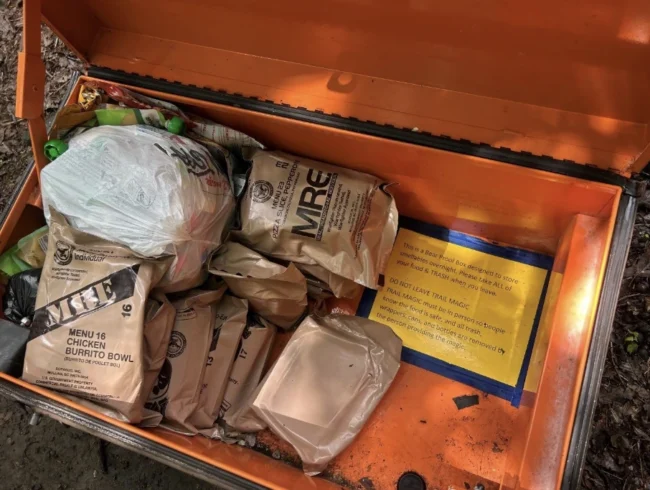
Here is an example of what a Ridgerunner saw when first opening the bear box at Ed Garvey Shelter in Maryland earlier this month. Note the sign in the corner reminding folks not to leave trail magic. The Ridgerunner had to clean out ants and spoiled food from the box after packing all this up. This, along with trash left at campsites, amounted to about 40 lbs that Ridgerunner Dreamsicle had to haul out.
Photo by Dreamsicle, PATC Maryland Ridgerunner.
Carry small treats with you on your own hikes to give to hikers in person. This can be a nice way to chat with hikers and brighten their day without risking your gift turning into a pile of trash for someone else to pack out.
There’s a reason that millions of people visit the A.T. every year, and that’s to enjoy its scenic beauty and find peace in nature. In fact, the A.T. is managed specifically to protect a wild experience that promotes freedom and self-reliance, two gifts of the Trail.
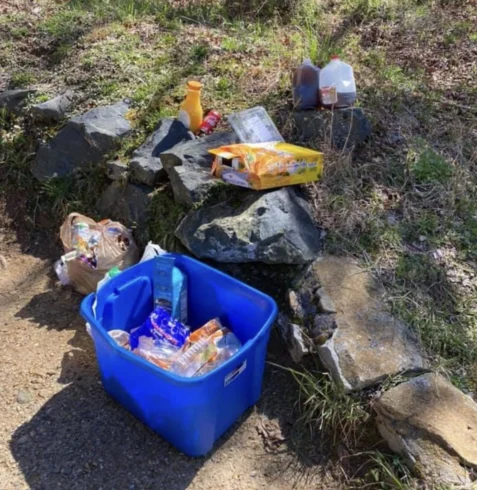
This food at a trailhead quickly became a trash pile – an unpleasant sight along the otherwise beautiful A.T.
Photo by Ashley Luke.
Help protect the Trail by becoming a volunteer! Volunteering with A.T. Clubs like PATC or joining a Trail Crew is the ultimate form of trail magic. Check out volunteer opportunities today!
When done right (see the definition at the beginning of this post), trail magic is a wonderful part of A.T. culture and can create some of the most memorable moments on someone’s hike.
Along with the suggestions above, follow these guidelines to keep trail magic magical:
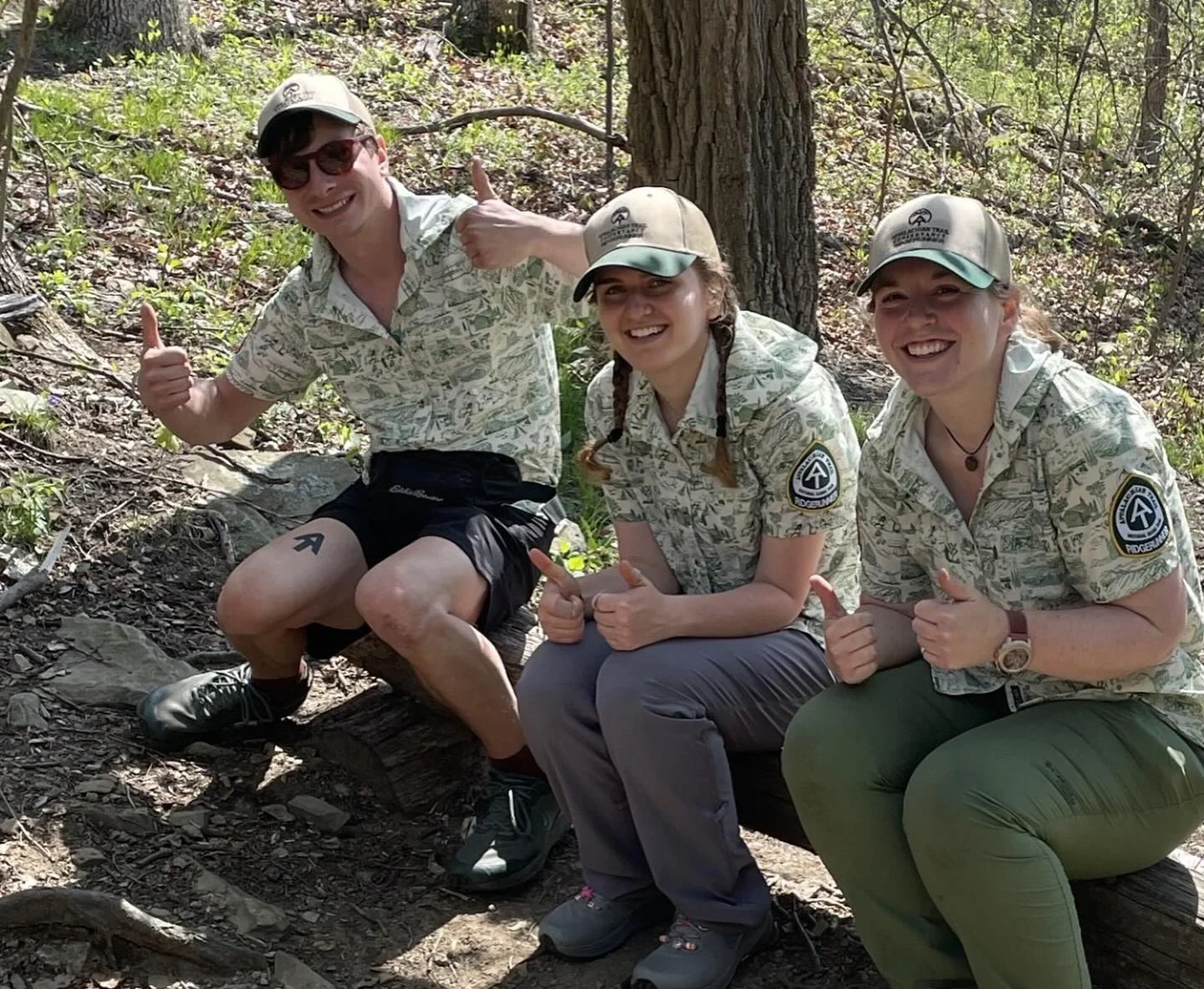
PATC Ridgerunners Dillon “Dreamsicle” Utter, Ellie “MacGyver” Strait, and Marissa “Mosey” Fulton. Photo courtesy of PATC.
This blog post was adapted from information shared by Dan Hippe, PATC Ridgerunner Coordinator. Thank you, Dan, and all the amazing A.T. volunteers who work hard to keep the Trail alive!
Learn more ways to support hikers and protect the Trail on our Trail Magic page and check out this article by Leave No Trace and the PATC about how to minimize impact to the trail while offering support to long-distance hikers.

Your gift by 12/31 will be matched by a group of generous donors! Plus, you’ll be entered into our New Year Gear giveaway. Double your impact, and get a chance to win big.
Give Now