Protecting the A.T. Hiking Experience

Sep 17, 2021

Sep 17, 2021

It hadn’t become an adage yet, but Benton MacKaye — the visionary of the Appalachian Trail (A.T.) — might as well have said, “If you build it, they will come.” In MacKaye’s case, also: “If you describe it, they will build it.”
The construction of the A.T. commenced almost immediately after MacKaye published An Appalachian Trail: A Project in Regional Planning, which articulated (among many things) a footpath running along the spine of the Appalachian Mountains. Unfortunately, we don’t have any data about day or overnight use of the A.T. from its beginning, but I have spoken with scores (hundreds?) of people who told me their first backpacking trip was on the A.T. So, how has the A.T. experience changed over time?
Since the first foot of the Trail was cleared, the first blaze painted, the first campsite established, A.T. managers have been performing visitor use management. After all, the purpose of a trail is to facilitate and guide visitation.
However, the purpose of the Appalachian Trail Conservancy (ATC) and A.T. maintaining clubs is to protect, manage and advocate for the Trail. With increased visitor use has come more impacts to the social experience of the A.T., the human-made resources and facilities of the Trail and the natural resources on and around it.
An interesting example of how things have changed is the Hawk Mountain Shelter in Georgia. Located about eight miles north of Springer Mountain, it is often the first night’s stop for aspiring northbound thru-hikers. Indeed, it was my first night’s stop as I started my 1977 thru-hike attempt on March 15. Today, March 15 is one of the first days to fill up for thru-hiker registration (though in 2021, nearly every day in March was at full capacity for thru-hikers registered on ATCamp.org). In 1977, my hiking partner and I saw no one, including on Springer, until we reached the Hawk Mountain Shelter, where two other campers were in residence.
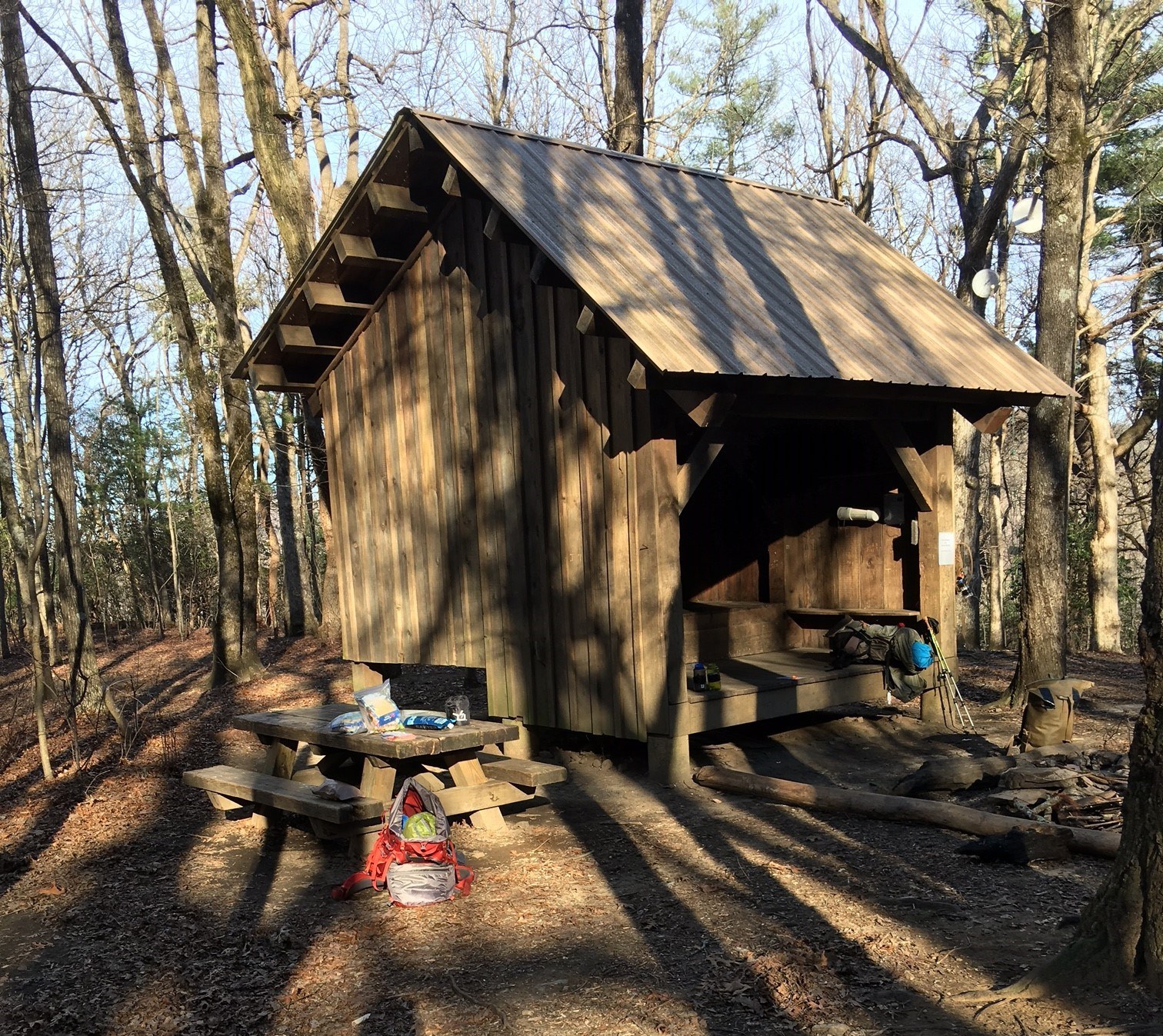
Located about eight miles north of the southern terminus of the A.T., Hawk Mountain Shelter is one of the most popular overnight locations for aspiring northbound thru-hikers and spring break campers.
Two years after that, the Hawk Mountain Shelter was moved when the A.T. was relocated off the summit of Hawk Mountain (and away from an Army Rangers staging area) to the north side. The new shelter location was about ten yards from the Trail and too close to water, so it was relocated again in 1993 about 300 yards north in a flat area with a more reliable water source. The shelter capacity was also doubled with the inclusion of a sleeping loft.
Before 1960, there was no Hawk Mountain Shelter. By 2015, springtime crowds of campers (as many as 100 individuals per night) were using the shelter area to camp. Because the new shelter site was surrounded by flat terrain, and because thru-hiker and spring break camper use kept increasing, the size of the impact area around the shelter grew to four acres, one of the largest camping impact areas anywhere along the A.T.
Alarmed, the Georgia Appalachian Trail Club (GATC), Chattahoochee National Forest and the ATC began a “Protecting the A.T. Hiking Experience” planning project to address the Hawk Mountain Shelter situation, as well as the crowding and increasing impact along the entire A.T. section in Georgia.
A number of useful recommendations from that planning process led to A.T. management improvements, including:
For our Hawk Mountain Shelter example, the outcome has been fourfold:
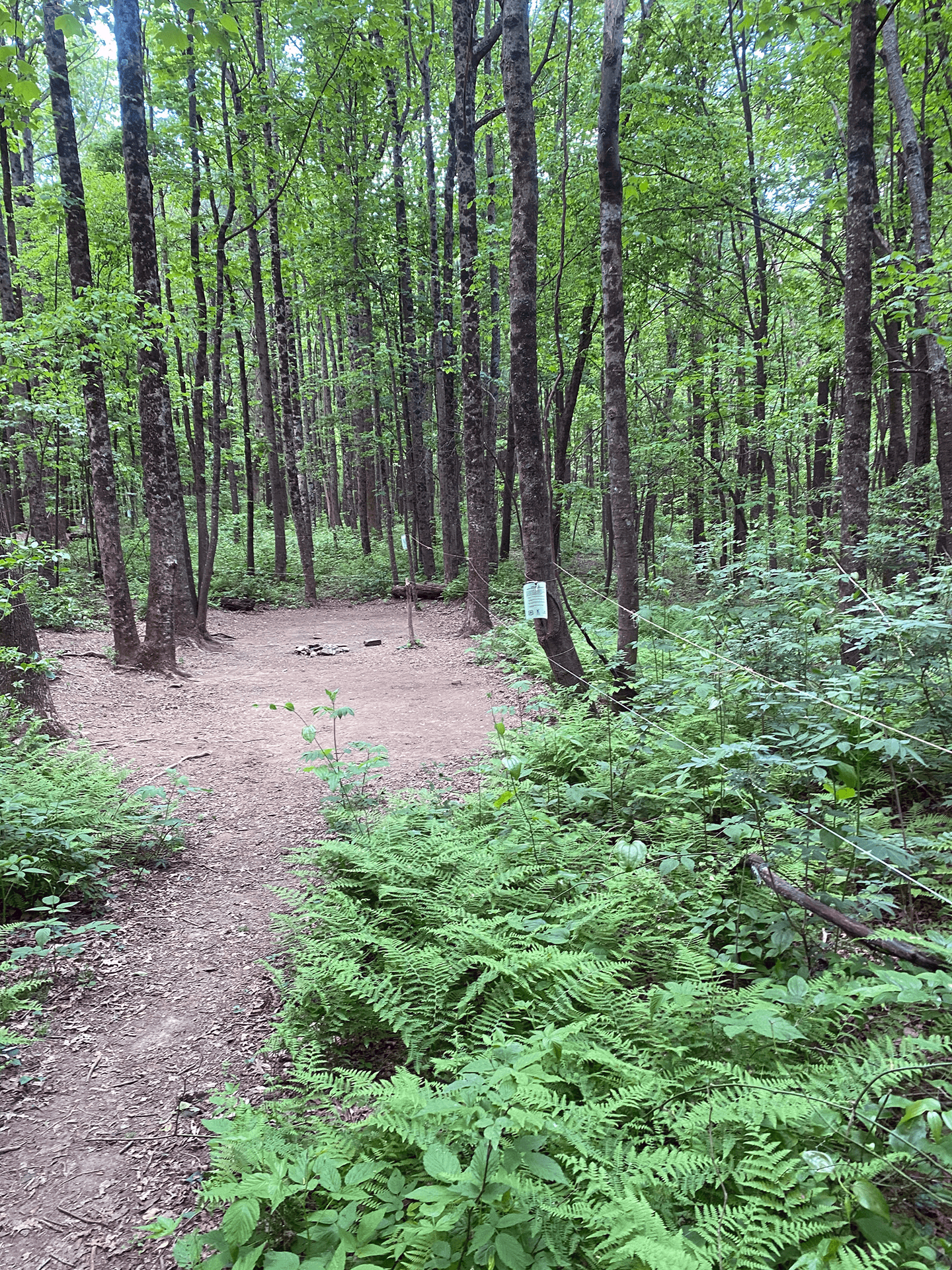
At Hawk Mountain Shelter, certain areas have been closed to camping. This gives the impacted vegetation an opportunity for regrowth.
While A.T. managers will continue to improve existing facilities, adding facilities to accommodate increased use is not feasible in the long run. Appropriate places to camp are limited. New facilities are expensive and time-consuming to build and maintain, and are also prone to misuse and vandalism.
Take, for example, privies. Many A.T. hikers and campers want more privies. Some hikers assume someone is paid to install and maintain them — but that is not the case. A.T. privies are designed, built and maintained by A.T. volunteers, with maintenance a truly thankless job that requires wearing full hazmat gear to deal with the trash and human waste users deposit. A privy in the Smokies costs thousands of dollars to construct, tens of thousands of dollars to airlift to the remote A.T. and constant transportation of mulch to remote backcountry sites to ensure adequate waste decomposition (not to mention emptying and rotating the decomposition bins). It requires a volunteer whose only job is to make sure adequate mulch is available and volunteers are found to deliver it to the remote privy locations.
So, tens of thousands of dollars for one privy, countless volunteer hours, continued maintenance for however long the privy remains in use versus each hiker carrying a trowel and appropriately cat holing at only the cost of a trowel, borne by each hiker.
User responsibility — leaving the A.T. better than you find it and/or helping with A.T. maintenance — is one of the main solutions to mitigating the impacts of increased visitor use and can be applied to all A.T. facilities. Examples of user responsibility include:
All of these are ways that large numbers of hikers can currently use the A.T. with little impact.
One hundred years after MacKaye’s article was published, A.T. managers still do not have ready access to visitor data including the number of users, how they use the Trail and/or when and where visitors are using the A.T. Over the next couple of years, we hope to further inform visitor use by collecting data across the Trail, aiding A.T. managers and users alike to help protect what always has been and, hopefully, what always will be a historic, unique and revitalizing A.T. experience.
Your donation supports our work to conserve the natural beauty of the Appalachian Trail, helping ensure its one-of-a-kind experience will benefit us all for generations to come.

Your gift for the A.T. will go 2x as far with the 2,000-Miler Match!
A group of 2,000-Milers are matching every gift made to the ATC up to $101,000 before 3/31.
Give Now