Lightning Safety

Sep 3, 2019

Laurie Potteiger
Sep 3, 2019
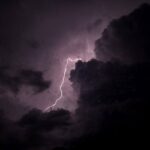
Who doesn’t thrill to the dazzling sight of lightning pulsing through the sky, flickering out of dark thunderclouds like the tongue of a gargantuan snake high in the sky?
Lightning is one of the most spectacular and powerful phenomena in nature, with power to kill or maim people, explode trees, and start wildfires. However, many of us tend to be too cavalier, not thinking about the force and destruction it can unleash. Perhaps we view it like a rainbow or comet—something far away, majestic and beautiful, that will never touch us.
Most of us have seen lightning thousands of times—from the safety of our cars or houses, on a small or large screen, and occasionally out in the wild. Because we’ve seen it so many times without any harm, we tend to be dismissive and think it is something that won’t ever affect us personally. “Oh, sure, a few people die from lightning,” we might say, “but not me.”
Perhaps we should take more cues from our pets. I’m not suggesting you crawl under a bed and whimper every time a storm passes over or jump, quivering, into the lap of your best friend. But, do respect the danger that this powerful force of nature can unleash that animals instinctively understand.
If you need help reframing how you think about lightning, consider how weather.gov describes the impact of a lightning strike: “Roughly equivalent to the kill radius and injury radius of a hand grenade.”
If you’re on the Appalachian Trail, especially in summer, you’re bound to observe lightning if you’re out long enough. While the odds of being struck randomly by lightning are very low—you’re six times more likely to die from an injury sustained by slipping in your bathtub—some areas along the A.T. can be extremely dangerous in a lightning storm. At least four people are known to have been killed on the A.T. as a result of lightning strikes. Many more have been struck—some of whom made a full recovery, while others suffered severe and lasting injuries.
If you are on an extended hike and far from civilization, you may not have the option of getting to the safest places (a car with a metal roof or a substantial, modern building). However, getting out of high-risk areas can mean the difference between life and death.
Follow these tips to stay safe:
Plan Ahead––check the weather forecast and avoid hazardous weather.
Monitoring forecasts and avoiding the most lightning-prone areas for storms are key.
Having a NOAA weather radio is ideal; weather websites and apps can give you forecasts ahead of time and send you alerts for thunderstorms. The site www.atweather.org provides forecasts for shelters along the A.T.
If you’re planning a day-hike, you might alter your plans by choosing another day or location, or shortening your hike to be off the Trail by the time storms arrive, which are often in the afternoon during summer. If you’re on a long-distance hike, you may be many miles from safety, so you need to know how to minimize your risk.
If you’re on the Trail when a storm is imminent and you hear thunder, see lightning, or spot threatening skies, you need to get away from the most dangerous places and seek places with lower risk.
In remote areas of the A.T., absolute safety cannot be guaranteed. Some areas, however, offer considerably less risk than others.
Here are key points to reduce your risk:
Don’t let yourself become a statistic because you succumbed to the fallacy that “it won’t happen to me.” With some forethought, planning, and caution, you can reduce the chances that you’ll be victim of the worst nature can hurl your way and live to hike another day.
Here are some links for more information:
https://www.weather.gov/safety/lightning
Know Before You Go Preparing to Visit a National Forest
Get the latest A.T. news, events, merchandise, and sneak peeks delivered directly to your inbox.