Imagine hiking through a section of the A.T. you’ve loved for years. The air is clear and the path is quiet, but something feels off. Trees that once provided you shade and shelter now may stand bare or they may no longer be standing at all. It’s not your imagination: more and more trees along the A.T. are in visible decline.
A Shifting Forest, Right Before Our Eyes
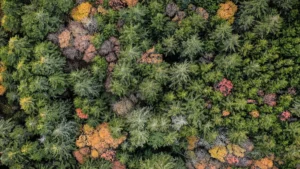 Photo by Horizonline Pictures
The growing number of dead and dying trees is a signal that forest health is under pressure from multiple directions. This affects more than just the hiking experience. Tree loss impacts ecosystems, wildlife, water quality, and visitor safety.
What’s behind the shift in forest health? Let’s dig in.
What Tree Species Are Dying?
The answer depends on where you are on the Trail, but no region has been spared. The regions that have seen the most decline are Virginia, the Mid-Atlantic, and Southern New England.
Mid-Atlantic & Virginia
- Red and white oaks, scrub oak, and chestnut oak are seeing high levels of stress and death.
- Most ash trees have already been wiped out by the non-native invasive beetle, the Emerald Ash Borer, but the few that remain are still under threat.
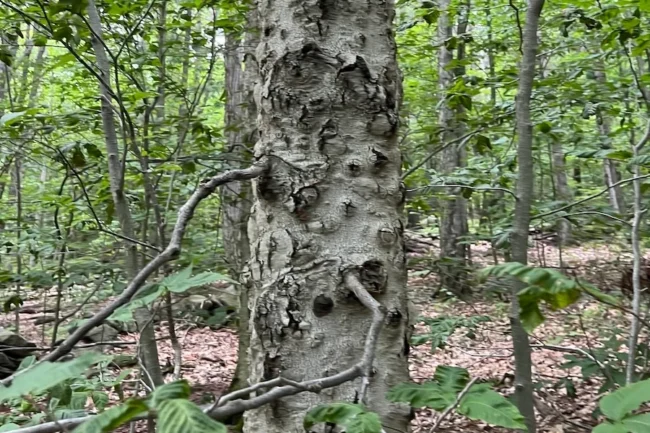
- Beech bark disease is spreading through beech populations and spongy moths eat through leaves.
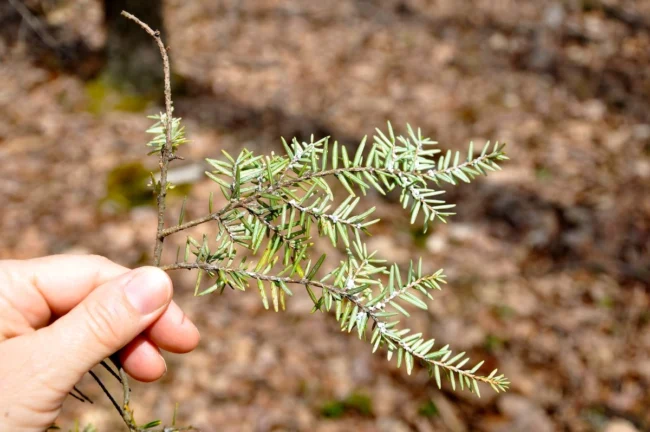
- Eastern hemlocks, long under siege from the invasive hemlock woolly adelgid (see photo), continue to decline.
Southern New England
- White pines are being hit by needle cast disease.
- American beech trees are showing signs of beech leaf disease and beech scale infestation (see photo).
Why Is This Happening?
The answer is as complex and intricate as the ecosystems these trees are a part of. Unhealthy trees are the result of many factors including pest invasions, non-native invasive species, development, climate stress, and long-term forest imbalances.
 Pests and Diseases
- Spongy moths and webworms feast on leaves, leaving trees defoliated and weakened.
- Sudden Oak Death, a fungal disease, is spreading in small populations throughout the Mid-Atlantic region
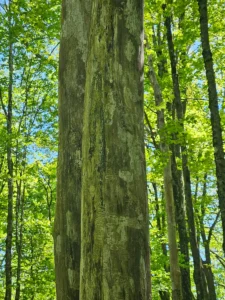
- Invasive pests like the Emerald Ash Borer (see photo) and hemlock woolly adelgid have decimated tree populations.
- Beech bark disease is spreading through beech populations.
Environmental Stress
- The climate is changing: too much rain, then long dry spells. Trees can’t keep up.
- Warming temperatures are throwing off the natural cycles that trees rely on to thrive.
- Many forests lack diversity since regrowing after logging. Forests made up of trees that are all the same species and the same age are more vulnerable to pests and diseases and are not as resilient to climate stress.
- Non-native invasive plants are outcompeting native trees.
Other Compounding Issues
- Deer overpopulation is preventing new trees from growing and saplings are getting eaten before they mature.
- Invasive earthworms and non-native plant species are disrupting soil and undergrowth.
- Human behavior also plays a role. Carving into trees, transporting firewood, and straying off the Trail all add to the problem.
What Is a Hazard Tree?
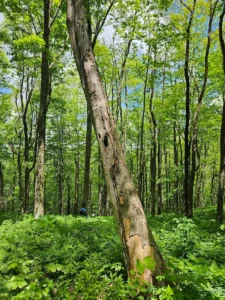
It’s not just sad to see a dying tree, it can also be dangerous.
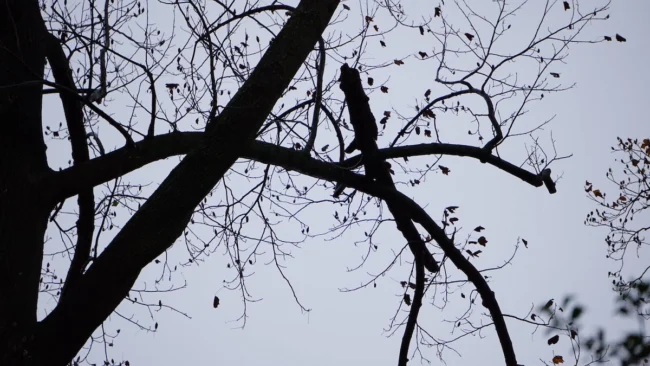
A hazard tree is a dead or dying tree that poses a risk to hikers and campers. These trees are more likely to drop limbs or fall entirely, especially during storms or high winds.
Signs a Tree Might Be a Hazard
- No leaves during the growing season
- Fungus or mushrooms growing on the trunk
- Cracked, leaning, or hollow trunk
- Large branches that look broken or weak
- Missing or peeling bark
What You Should Do
- Don’t camp underneath dead or unhealthy-looking trees.
- Take note (GPS location, photo) and report the tree to trailconditions@appalachiantrail.org.
- Stay alert—even a small breeze can turn a weak tree limb into a falling hazard.
How the ATC is Helping
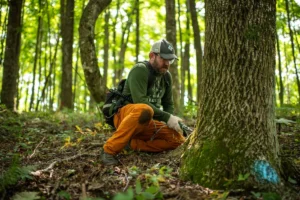 Photo by Horizonline Pictures
The Appalachian Trail Conservancy and our partners are actively working to protect vulnerable tree species and reduce forest threats.
For example, ash tree treatments are being used to protect high-value ash trees from the Emerald Ash Borer along certain parts of the Trail. The ATC is also gearing up to begin the treatment process for priority hemlocks in the Southern New England region.

These treatments are helping to maintain shade, stabilize the soil, and preserve ecological balance in key sections.
Other efforts include:
Photo by Horizonline Pictures
What You Can Do
Conservation isn’t just for scientists or rangers. You can make a difference whether you’re on or off the Trail.
While on the Trail
- Stay on designated paths to avoid trampling roots and undergrowth.
- Don’t carve names or symbols into tree bark.
- Never break branches or damage live trees.
- Avoid camping near visibly damaged or dead trees.
- Don’t burn live wood and avoid areas already under stress.
At Home or In Your Community
-
- Never transport firewood across state lines as it can spread invasive species
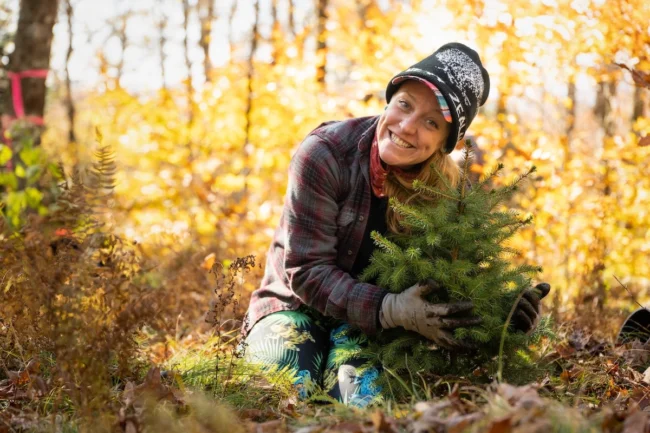
- Plant native trees and plants that support local ecosystems.
- Learn your local trees. Know what’s normal and what’s not.
- Report early signs of disease or unusual tree death to local authorities.
- Help keep deer populations in check through ethical hunting where permitted.
- Remove invasive species when possible—every bit helps.
Photo by Horizonline Pictures
Protect the Forest, Protect the Trail
The Appalachian Trail is more than a hiking route—it’s a living forest and home to many species. The health of its trees is critical to the ecosystems it supports and the experiences it provides.
So next time you lace up your boots and hit the Trail, take a moment to look up. Be mindful of the trees, notice what’s changing, and remember your individual impact. Help us keep the A.T. strong, healthy, and wild.
Learn more about ATC’s Science and Stewardship along the A.T.