Of Ruts and Root Balls: Assessing the A.T. for Improvements

Sep 24, 2026

Sep 24, 2026

Flowers, wildlife, and scenic views are focal points for many hikers, but specialists with the Appalachian Trail Conservancy walk while keeping a keen eye on the treadway itself.
ATC Trail Specialist Elizabeth Leibel hiked about 300 miles of the Trail this spring and summer, looking all along the way for deficiencies on the path. Much of the distance—from the Tennessee-Virginia border to Rockfish Gap at Shenandoah National Park—was on mileage impacted by Hurricane Helene, two years ago this September.
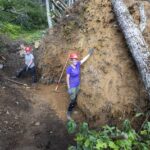
“The primary thing I’m looking for is Helene damage,” Leibel said. “There were a lot of root ball holes where the winds ripped the trees out of the ground, leaving big craters in the tread.”
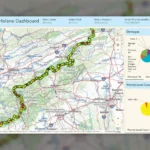
Over the spring and summer, with help from volunteers and fellow ATC staff along the way, Leibel charted about 2,500 deficiency data points on the A.T. Not just root ball holes, but also erosion, ruts, and other treadway troubles.
Photo: Konnarock Trail Crew volunteers show the size of a root ball hole left by Hurricane Helene. Near Unicoi, TN.
Those deficiencies were some of the roughly 13,000 total data points collected by ATC trail specialists in Georgia, North Carolina, Tennessee, and Virginia. For ATC Senior Trail Operations Manager Josh Kloehn, the work in Southern Appalachia is part of a broader effort to toughen the treadway.
“We want to make the trail as resilient to future storms as possible,” Kloehn said. “Where there are issues now and where issues were worsened by Helene, those will be priorities to make less susceptible to future big storms and high-water events.”
That doesn’t mean making the Trail easier to hike, but rather building it smarter, he said. With limited resources to manage the A.T., better data leads to smarter decisions.
“Part of the ATC’s role is coordinating trail management, providing support to clubs and the land managers across the corridor,” Kloehn said. “Having data like this is helpful in providing training, being a good partner, and identifying future projects.”
Left: Entrenched trail exacerbates erosion; right: exposed root ladder creates an obstacle.
Leibel hikes at a pace of about 3-8 miles per day, looking for obvious issues as well as subtle signs of troubled Trail.
“I begin my hike, taking note of anything that qualifies as a deficiency. I mark it in this app, take measurements, pictures, notes,” Leibel said. “Then I just keep hiking on to the next one.”
She started with the ATC in 2025 as a co-lead for the Konnarock Trail Crew, where she developed an eye for a well-made trail. Across 300 miles trekked this season, she said a common theme emerges.
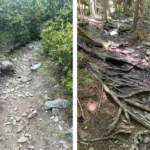
“One of the biggest themes is erosion issues,” Leibel said. “Whether it was how the trail was originally laid out, lack of drainage, or overuse in some areas, erosion has been the biggest trend.”
Left uncorrected, erosion and many other trail deficiencies get worse with time, eventually turning from a trickle to a full-blown washout. The thousands of deficiency data points collected by ATC trail specialists can be used in the future to guide the efforts of trail clubs, ATC trail crews like Konnarock, SWEAT, and Rocky Top, trail maintainers, land managers, and other A.T. partners.
“This is one of the most comprehensive surveys that we’ve done of the trail, in terms of deficiencies and needed repairs,” Leibel said. “It is an opportunity to point out some of these repairs that maybe get overlooked by the average hiker on the trail.”
Although Helene damages linger, as of summer 2026 there are only a few miles of A.T. still closed by land mangers due to storm impacts. Initially, more than 400 miles of Trail were impacted.
“The clubs have done a really amazing job of addressing a lot of these major damages,” Leibel said. “When I started, they’d already done a lot of amazing saw work.”
Meanwhile in New England, ATC specialists are engaging in similar work to catalogue deficiencies that will guide repairs with federal support from the Legacy Restoration Fund, which expired in 2025. This crucial funding law awaits reauthorization from U.S. Congress to address deferred maintenance on national public lands, including the A.T.
In Virginia, Leibel says support from the Trail community has been crucial to her legwork.
“Shoutout to the volunteers who have helped shuttle me; they’ve all been fantastic,” Leibel said. “Thanks to them, I didn’t have to do as much out-and-back hiking.”
Now that she and other southern trail specialists are wrapping up their assessments of A.T. deficiencies, next steps will be to prioritize repairs and then get to work with our partners.
“That’s one thing that surprises people, the amount of planning and logistics that go into maintaining a trail,” Leibel said. “Collecting the datapoints and noticing needed fixes has been great, but what I’m really looking forward to is getting out there and fixing stuff.”