Appalachian Trail Conservancy’s Flagship Crew
Konnarock was founded in 1983 and named after its original base camp in southwest Virginia. The crew works on the Appalachian Trail from Rockfish Gap, near Waynesboro, Virginia, to the Trail’s southern terminus at Springer Mountain in Georgia. The program is a joint venture of the Appalachian Trail Conservancy, the 12 southern Trail clubs, the U.S. Forest Service, and the National Park Service.
At Konnarock, volunteers of different ages, backgrounds, and experience levels work together to build durable trail that will last for generations. After a multi-day session working as a team, learning new skills, and living in the backcountry both the crew and the trail are transformed. No experience is necessary, but you must be 17 years or older to apply. If you are 17, your parent or guardian will need to sign a release form prior to the work week. The Appalachian Trail Conservancy provides training, equipment, and room and board. Crews are transported in ATC vehicles from the base camp in Sugar Grove to a primitive, backcountry tent camp near the project site.

Base Camp
The Konnarock Crew is hosted by the Mount Rogers National Recreation Area at its Sugar Grove Work Center. The main building houses dining and recreation facilities, an office, and the crew’s tool room. Separate buildings provide a large, institutional kitchen and two shower houses, with bathroom and laundry facilities. Crew members sleep in simple cabins (“pods”) with beds and electricity.
Crew Week
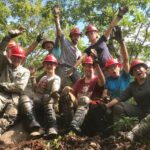
Crew members arrive on the evening before their work week starts in time to get settled in, eat dinner, and attend an orientation session. Whether they will be working with Crew 1 or Crew 2, crew members meet their crew leaders and fellow volunteers, and are issued safety equipment and loaner camping gear as needed. An early morning on the first day of the crew week (7 a.m.) begins with a hearty breakfast, followed by any last-minute preparations and departure to the project sites. Volunteers work a multi-day crew session in the field, tent camping at a remote site, and return to base camp for a celebratory dinner the evening of the final day.
Volunteers working more than one session are welcome to stay at Konnarock base camp between sessions, except for the mid-season breaks. Other accommodations may be available for multi-week volunteers during the mid-season breaks. Multi-week volunteers should plan to spend at least an hour or two of their days off pitching in to keep base camp running smoothly—and the rest of it relaxing and exploring the beautiful Mount Rogers area!

2026 Konnarock Trail Crew Schedule
Arrive at Basecamp in the afternoon of April 21st.
Byron H. Reece – Trail Relocation
The Crew will continue a multi-year relocation of the busiest side trail accessing the A.T. in the Blood Mountain Wilderness Area, Georgia. Work will consist of building wilderness-grade trail with minimal land impact and structures. Hike to the worksite is approximately 1.5 miles. The crew will camp at DeSoto Falls Recreation Area, a developed Forest Service campground nearby.
Brown Fork Gap – Trail Relocation
Volunteers will construct sustainable trail around a steep, eroded section of the A.T. north of Stecoah Gap. The Crew will camp on a gated U.S. Forest Service road. Access to the project site is via a steep 0.15-mile bushwack (off-trail hike) from the campsite, followed by a 0.5-mile hike on the A.T.
Arrive at Basecamp in the afternoon of May 5th.
Cripple Creek – Trail Rehabilitation
This project will address the Cripple Creek crossings in the Priest Wilderness Area in central Virginia. Work includes resetting and replacing rock steps, building rock crib walls, and re-establishing sidehill trail in areas with extensive, rooty trail creep. Hike from the trailhead to the worksite is approximately 1 mile with minimal elevation gain. The Crew will camp at the Devil’s Backbone Outpost Campground nearby.
Rhododendron Gap – Trail Relocation
The goal of this project is to move the A.T. out of an eroded, poorly drained area of sensitive spruce forest in the Lewis Fork Wilderness Area. New treadway will be constructed in an open area near Wilburn Ridge in the Mount Rogers High Country. Volunteers will camp in the high country with UTV support. Participants will hike approximately 2 miles with about 800 feet of elevation gain to the campsite. The worksite is adjacent to the campsite. Volunteers will enjoy panoramic views of the Grayson Highlands area.
Arrive at Basecamp in the afternoon of May 13th.
Cripple Creek – Trail Rehabilitation
This project will address the Cripple Creek crossings in the Priest Wilderness Area in central Virginia. Work includes resetting and replacing rock steps, building rock crib walls, and re-establishing sidehill trail in areas with extensive, rooty trail creep. Hike from the trailhead to the worksite is approximately 1 mile with minimal elevation gain. The Crew will camp at the Devil’s Backbone Outpost Campground nearby.
Rhododendron Gap – Trail Relocation
The goal of this project is to move the A.T. out of an eroded, poorly drained area of sensitive spruce forest in the Lewis Fork Wilderness Area. New treadway will be constructed in an open area near Wilburn Ridge in the Mount Rogers High Country. Volunteers will camp in the high country with UTV support. Participants will hike approximately 2 miles with about 800 feet of elevation gain to the campsite. The worksite is adjacent to the campsite. Volunteers will enjoy panoramic views of the Grayson Highlands area.
Arrive at Basecamp in the afternoon of May 20th.
Byron H. Reece – Trail Relocation
The Crew will continue a multi-year relocation of the busiest side trail accessing the A.T. in the Blood Mountain Wilderness Area, Georgia. Work will consist of building wilderness-grade trail with minimal land impact and structures. Hike to the worksite is approximately 1.5 miles. The crew will camp at DeSoto Falls Recreation Area, a developed Forest Service campground nearby.
Beech/Coleman Gap – Trail Rehabilitation
Volunteers will repair heavily eroded treadway along a remote 1.7-mile section of the A.T. in the Southern Nantahala Wilderness Area. This is a backcountry project with a 2.6-mile hike to the campsite. Participants are required to backpack individual camping and personal gear, as well as a share of communal food, cooking accoutrements, and tools.
Arrive at Basecamp in the afternoon of June 2nd.
Greasy Creek Gap Trail Restoration
This project will address extensive treadway damage caused by Hurricane Helene near Hampton, Tennessee. Volunteers will help with diverse types of trail work, including root ball hole repair, installation of log structures, and erosion control features. The campsite is next to a gated U.S. Forest Service road.
This 0.5-mile trail relocation project replaces an open road walk near Tanyard Gap on the A.T. north of Hot Springs, North Carolina. Work will consist of corridor clearing, sidehill construction, and installing structures, as necessary. Volunteers will camp nearby on U.S. Forest Service property.
Arrive at Basecamp in the afternoon of June 10th
This 0.5-mile trail relocation project replaces an open road walk near Tanyard Gap on the A.T. north of Hot Springs, North Carolina. Work will consist of corridor clearing, sidehill construction, and installing structures, as necessary. Volunteers will camp nearby on U.S. Forest Service property.
Greasy Creek Gap – Trail Rehabilitation
This project will address extensive treadway damage caused by Hurricane Helene near Hampton, Tennessee. Volunteers will help with diverse types of trail work, including root ball hole repair, installation of log structures, and erosion control features. The campsite is next to a gated U.S. Forest Service road.
Arrive at Basecamp in the afternoon of June 18th.
Mount Rogers – Trail Rehabilitation
This project will address treadway damage caused by Hurricane Helene. Volunteers will help repair root ball holes and erosion at locations along a section of the Trail north of Damascus, Virginia. For this 3-day session, the Crew will stay at the Konnarock Basecamp and commute to and from the worksite each day. Participants are encouraged to join for the entire session, although weekend-only attendance is available.
Glade Mountain – Trail Rehabilitation
Volunteers will redefine treadway and install log steps and drainage features on a steep, eroded section of A.T. Hike to the worksite is approximately 1.1 miles. For this 3-day session, the Crew will stay at the Konnarock Basecamp and commute to and from the worksite each day. Participants are encouraged to join for the entire session, although weekend-only attendance is available.
Arrive at Basecamp in the afternoon of June 23rd.
Rhododendron Gap – Trail Relocation
The goal of this project is to move the A.T. out of an eroded, poorly drained area of sensitive spruce forest in the Lewis Fork Wilderness Area. New treadway will be constructed in an open area near Wilburn Ridge in the Mount Rogers High Country. Volunteers will camp in the high country with UTV support. Participants will hike approximately 2 miles with about 800 feet of elevation gain to the campsite. The worksite is adjacent to the campsite. Volunteers will enjoy panoramic views of the Grayson Highlands area.
This 0.5-mile trail relocation project replaces an open road walk near Tanyard Gap on the A.T. north of Hot Springs, North Carolina. Work will consist of corridor clearing, sidehill construction, and installing structures, as necessary. Volunteers will camp nearby on U.S. Forest Service property.
Arrive at Basecamp in the afternoon of July 5th.
Rhododendron Gap – Trail Relocation
The goal of this project is to move the A.T. out of an eroded, poorly drained area of sensitive spruce forest in the Lewis Fork Wilderness Area. New treadway will be constructed in an open area near Wilburn Ridge in the Mount Rogers High Country. Volunteers will camp in the high country with UTV support. Participants will hike approximately 2 miles with about 800 feet of elevation gain to the campsite. The worksite is adjacent to the campsite. Volunteers will enjoy panoramic views of the Grayson Highlands area.
Arrive at Basecamp in the afternoon of July 13th.
Catawba Mountain – Trail Relocation
This project will complete a section of the A.T. and a shelter access trail near the Catawba Mountain Shelter in southwest Virginia. Construction of 0.4 miles of new trail will consist of sidehill, log steps, and drainage features. Volunteers will camp nearby on an old home site in the McAfee Knob area.
Arrive at Basecamp in the afternoon of July 21st.
Little Wilson Creek Wilderness – Trail Relocation
This project will complete a short trail relocation and improve treadway conditions in the Little Wilson Creek Wilderness Area in southwest Virginia. Work will consist of building wilderness-grade trail with minimal land impact, improving drainage, and constructing minimalist stone structures. Hike to the worksite is approximately 1.5 miles via the A.T. across Stone Mountain with expansive views of the Mount Rogers High Country. Volunteers will camp at the Scales on the Mount Rogers National Recreation Area.
Arrive at Basecamp in the afternoon of July 29th.
Catawba Mountain – Trail Relocation
This project will complete a section of the A.T. and a shelter access trail near the Catawba Mountain Shelter in southwest Virginia. Construction of 0.4 miles of new trail will consist of sidehill, log steps, and drainage features. Volunteers will camp nearby on an old home site in the McAfee Knob area.
Arrive at Basecamp in the afternoon of August 6th
Catawba Mountain – Trail Relocation
This project will complete a section of the A.T. and a shelter access trail near the Catawba Mountain Shelter in southwest Virginia. Construction of 0.4 miles of new trail will consist of sidehill, log steps, and drainage features. Volunteers will camp nearby on an old home site in the McAfee Knob area.
Comer’s Creek Crossing – Trail Rehabilitation
This project will complete the construction of stone steps and cribbing on the Trail, south of Comer’s Creek. The worksite is next to the tallest cascade waterfall on the Mount Rogers National Recreation Area. Hike to the worksite is 0.5 miles from the trailhead. The crew will stay at the Konnarock Basecamp and commute to and from the worksite each day.