Priority #1: Safety on the A.T.
Nov 6, 2025

Nov 6, 2025

The Appalachian Trail (A.T.) is so well-traveled it can be easy to forget how remote most of the Trail actually is. There is often little or no cell service and help can be hours away in the event of an emergency. Make sure you have the equipment and knowledge you need to stay healthy and safe during your hike. In an emergency, call 911.
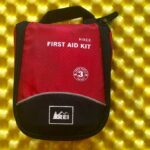
Emergencies happen to even the most well-prepared and experienced hikers. Proper clothing, equipment, a stocked first aid kit, and a good emergency kit can make all the difference if you find yourself in trouble. It’s essential to keep your pack with you at all times, even for quick trips to go to the bathroom, so you have these essentials with you no matter what.
2026 A.T. hikers planning to hike anywhere between Davenport Gap and the New River at Pearisburg, VA (NOBO miles 239.4 to 637.8) should learn about the risks associated with hiking through areas damaged by Hurricane Helene in September 2024. While the Trail is open through this section and crews did a ton of repair work during the 2025 season, risks created by the storm still linger. High wildfire risk, landslide risk, hazardous trees, and more make it extremely important to be prepared this year.
Thru-hikers may want to consider flip flopping: starting north of the New River and saving the south for the fall, when crews will have had even more time to make repairs. Visit our Hiking & Helene page for more information about the risks and how to stay safe.
Hiking & Helene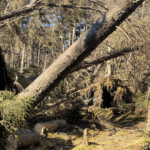
Your safety should be your main priority while on the Trail, but if you find yourself in an emergency, first determine your location as best you can and then call 911.
Staying calm, warm and hydrated while you wait for help is critical. Don’t try to bushwhack your way out as this can often make you harder to find or move you even further from the Trail.

Laurie Potteiger
While on the Trail, you’ll experience a wide range of weather. By packing proper clothing and keeping tabs on the forecast, you can help keep yourself safe from the elements.
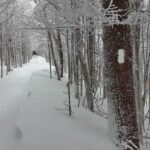
Virtually every part of the Trail has the potential to receive snowfall through early April, with winter weather lingering into late May at high elevations in New England. Northbound (NOBO) hikers leaving from Springer Mountain should be prepared for cold weather and slow travel in the event of deep snow. We recommend NOBOs keep their warm gear until they are north of the Grayson Highlands in Virginia, and then get their warm gear back before tackling the White Mountains in New Hampshire. For SOBOs, keep your warm gear until you’re through the White Mountains, and get it back before heading up into the Grayson Highlands.
A cold rain can be the most dangerous weather for hikers because it can cause hypothermia even when conditions are well above freezing. Avoid hypothermia by dressing in layers of synthetic clothing, eating well, staying hydrated, and knowing when to take refuge in a dry sleeping bag and tent or shelter.
Mike Williams
Learn the signs of heat exhaustion and heatstroke. Take extra care in hot, humid weather by taking frequent breaks in the shade, wearing sunscreen, drinking lots of fluids (essential year-round), and replenishing electrolytes with salty snacks.
Thunder and lightning storms along the Trail can be intense, especially at higher elevations. Check the weather and plan your route to avoid open areas, summits, and ridges during storms. If you are in an open area and hear thunder or the sky looks sinister, move to lower forested ground. Avoid areas with tall features that stand out from the surroundings: individual trees, monuments, communication towers, etc.

ATweather.org provides forecasts for the A.T. based on state and location.
Proper food storage is the best way to prevent bad encounters with wildlife on the Trail. Along with bears, there are a few other critters to consider on your A.T. hike. Never touch or approach wildlife, however small.

Horizonline Pictures
Tick-borne diseases have become a serious and real health risk along the Trail. Multiple species of ticks can be found in every one of the 14 states that the A.T. passes through.
Doing a few simple things can help prevent getting a tick-borne disease on the Trail:

While the A.T. is safer than most places, it is not immune from crime or isolated from the problems of society.
Here are a few tips to help keep yourself safe while on Trail:

Horizonline Pictures
Use the ATC’s Incident Report Form to report:
Having trouble using the form? You can also send a detailed email directly to incident@appalachiantrail.org.
Bear encounters should be reported using the ATC’s Bear Encounter Report form.
Please note: Submitting an Incident Report does not trigger an immediate law enforcement response, especially after hours and on weekends. If you are in immediate danger, call 911.
With some preparation, proper gear, and situational awareness, you can be prepared for many of the Trail’s challenges.
Catch up on our hiker preparation series